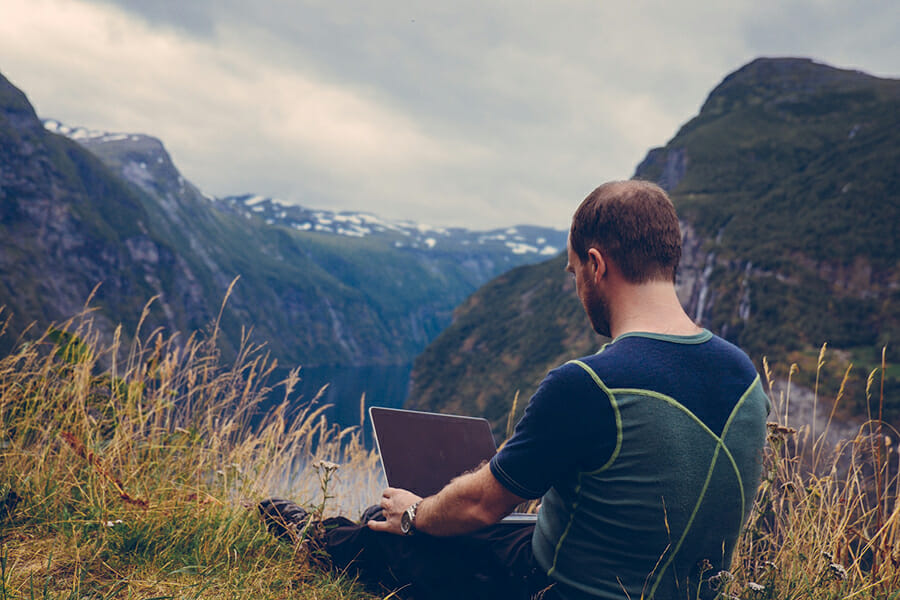
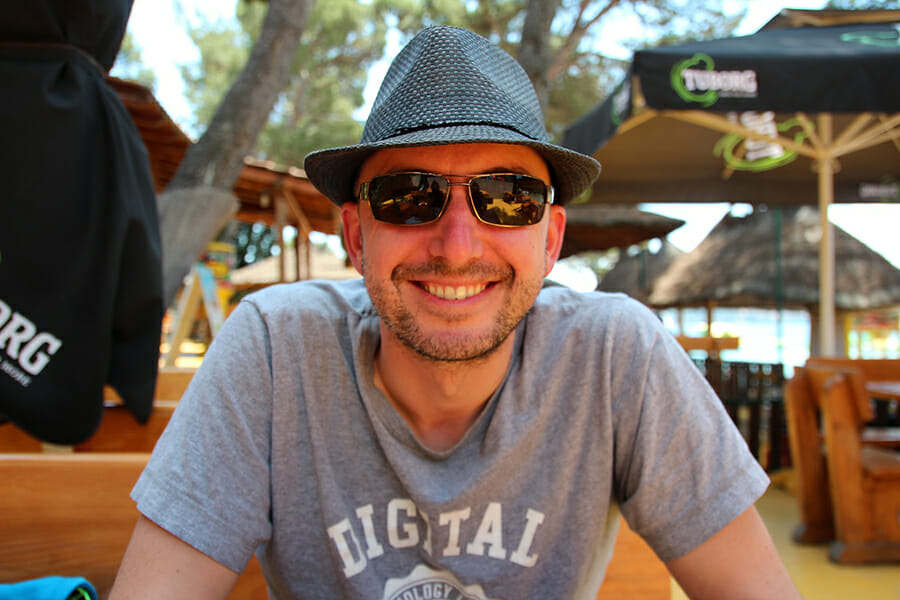
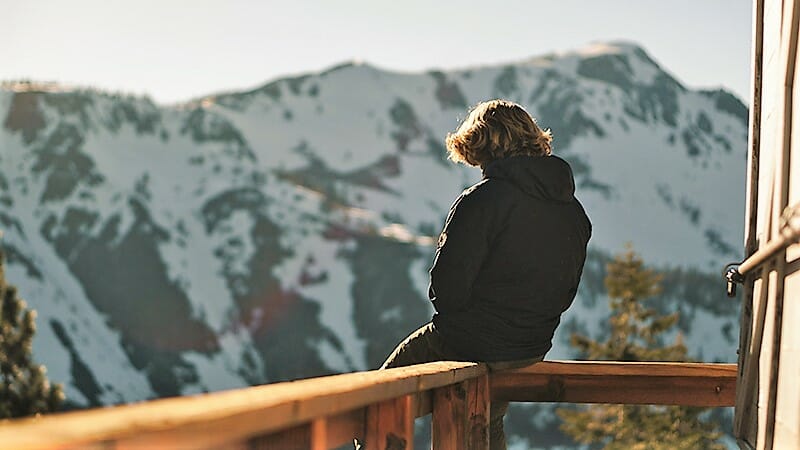
The lifestyle of working nomads seems enviable, especially if you answer ‘yes’ to these questions:
Do you have a good job, but being stuck in the same office space every day makes you feel suffocated?
Are you keen to see the world without worrying about how many vacation days you have left?
Thought so.
In this case, have you thought seriously about how to join other working nomads, travelling and making money? ‘Digital nomad’ is probably the most recognised term for this, and it’s not so far out of your reach!
This way of living not only gives you the chance to travel a lot, but saves the money, time and hassle of regular work commutes, not to mention the stress of office politics. Working nomads enjoy the flexibility of location independence.
Is it the dream we think it may be though?
There are some things you have to think of before you make such a decision. If you are not sure about it, continue reading this article and find out a few secrets of working nomads.
How do working nomads survive?
You probably already know that digital nomads survive thanks to technology and the internet. The online world offers a great number of freelance jobs and opportunities, and all you need is to be proficient in a skill that allows you to work completely remotely.
If you’re an engineer in construction for example, you might consider changing your career and becoming a web designer, or even a blogger if you feel you’re a creative person. But of course, these are just two of the options available out there.
You don’t necessarily need to become a freelancer, because there are more and more companies that offer remote jobs. All you need to do is begin searching and apply for the ones that are suitable.
After this, you need a laptop, a handle on time management and you’re on your way.
Choosing where to work from as a digital nomad
All people who dream about becoming digital nomads wonder if they can make money while they travel. Yes, of course, you can. And there are so many people who are doing it right now. However, it depends on where you travel and on your abilities to plan your budget, find affordable accommodation, and search for cheap plane tickets.
For instance, if you travel and live in places like Indonesia, Chiang Mai, or Bali, you will end up paying less on rent, transportation and groceries because these places are less expensive than in many European countries.
Or, you can choose to house and pet sit and secure free accommodation in return for taking good care of someone else’s place and beloved animal friends.
This doesn’t mean you can’t find other good deals in Europe. If you don’t want to live too far from your home country, you can always choose smaller cities and even villages that are cheaper than the busy European capitals.
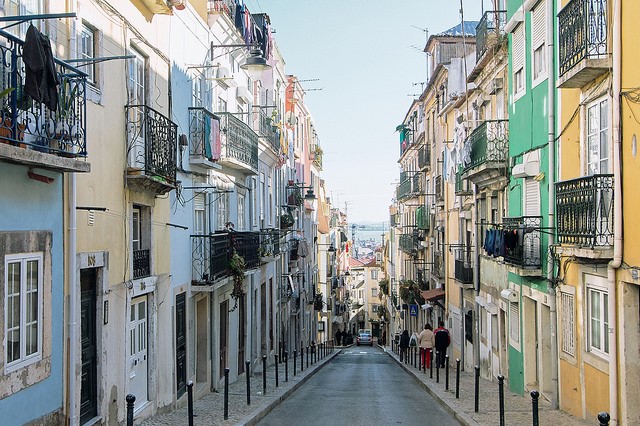
Some of our favourite working nomads hot spots include Lisbon and Amsterdam. Click the links for a taste of these excellent cities.
Examples for consideration
Let’s say you want to live in Scotland and explore its beauty for a while. Edinburgh and Glasgow are amazing cities, but you might want to settle in a smaller, less touristy place where prices are friendlier. This way, you can you live well and have enough money to travel around. You don’t want to stay in such a beautiful place without learning about its history and seeing its natural wonders, especially since Scotland is full of beautiful hiking paths that blow every visitor’s mind.
The Ayrshire Coastal Path, declared one of Scotland’s Great Trails by Scottish Natural Heritage is a great place to get closer to the country, see its beauty, and learn about its past.
If you’re looking to settle and work for a while in a more remote place, you should check which of the villages and accommodations surrounding the area offer a great internet connection. Internet and appropriate technology are the first thing to worry about when you are a digital nomad looking for a place to work on the road.
Scotland is just an example. Spain, Italy, Portugal, Greece and other European countries are great places for digital nomads, as long as you avoid the bigger, more expensive cities or find economical ways to live and stay for a while.
Does the life of a working nomad get lonely?
The truth is that sometimes digital nomads get lonely, especially if you’re travelling solo. But you’re never lonely for long. There are so many people who work while travelling that making new buddies is never difficult.
Yes, sometimes you will have to work instead of exploring the surroundings with your new friends. But this is something normal, isn’t it?
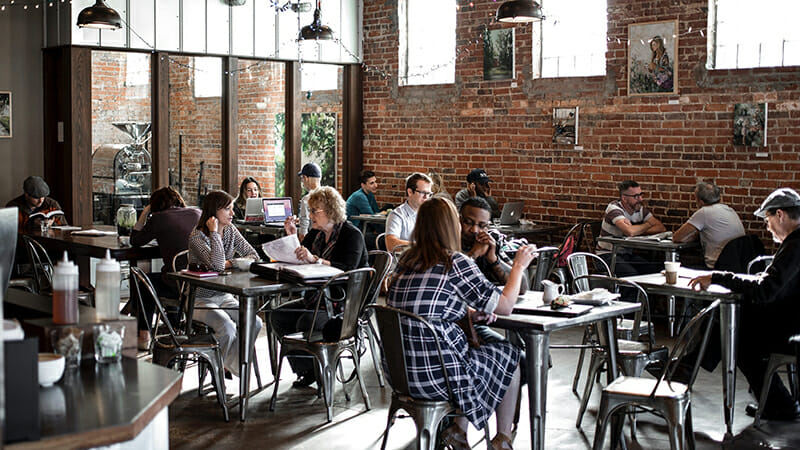
Also, to avoid loneliness, you can always join some of the many Facebook groupsdedicated to digital nomads, make an account on Meetup, as well as try to do your job from coffee shops or even coworking spaces. Europe is full of such places where you can rent your desk, work, and mingle with other people just like you. Do keep in mind that these specially created places are not free of charge.
Now you know some of the secrets of digital nomad life. Before deciding to quit your job, make sure you have the right skills for a remote job and try to get in touch with as many digital nomads as possible to find out different stories from different places. It is an important change, after all.
We’d love to hear from you in the comments – are you a digital nomad or would you like to be? Do you have recommendations on the best places to be a working nomad? Or any questions, let us know…
About the author:
Rebecca Brown is a translator by day, and a traveller mostly at night. She is an expert on living with jet lag – and packing in tiny suitcases. You can read more of her exploits at RoughDraft.
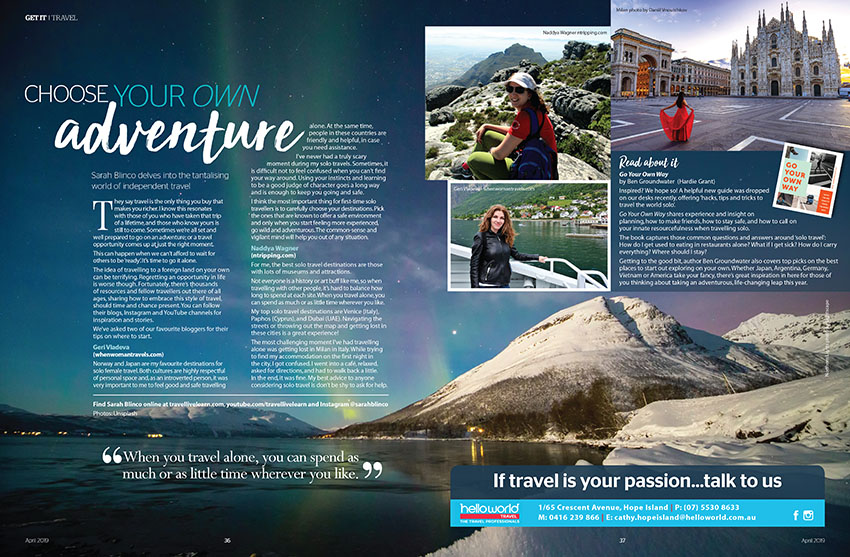
Daniel Brown shares five of his best tips for the adventurous lone traveller. If you’re heading off on a solo journey soon, read on. Here we cover trip planning, keeping your important documents and valuables safe, battery power and tech, dining solo and more…
~
Even though the trend of solo travelling is becoming more popular, it is agreeable that venturing alone without a companion is daunting. Luckily, there are clever tricks anyone yearning to be a lone traveller can make use of to feel more comfortable along the way.
I believe everyone can benefit from trying on the ‘lone traveller’ hat at some point in life.
Many swear that travelling solo can be likened to experiencing religious enlightenment!
Not only are you able to fully rely on your own judgements and ideas, but as a lone traveller, you can do whatever you please all throughout your journey.
A pretty liberating thought!
Of course, with all the freedoms of being a lone traveller, come the drawbacks. Some of these, concern safety and overall wellbeing.
To make things easier, following are my practical tips which will empower you to book your solo trip.
You might also enjoy our feature in Get it Magazine on how to choose your own solo adventure, including interviews with two of our fave bloggers. Read it here
Plan ahead
The very first tip after you have decided to venture out solo, is to remember to take some time and extra effort to plan the whole trip as thoroughly as possible.
Spontaneous travel is great, but when a co-pilot is not there to help you out, you will want to have a plan to fall back on.
Make a list of all the must-have items you cannot travel without. But remember, you’ll need to pack light. Heavy bags and luggage will slow you down, and it may be uncomfortable to carry extra through a crowded airport or bus station.
Next, double check the bookings, such as the taxi, the means of transportation and accommodation.
Something I was taught is to try and memorise maps as accurately as possible. It’s helpful so you don’t have to be reading a map in public (potentially looking lost), or if Google Maps fails, as sometimes it does.
Plan, book, and get ready for the time of your life. You inevitably make friends, whether you’re heading off on long term travel, a wellbeing retreat or city tours.
Make copies of your documents
The most important thing you should bring with you when travelling is a case which contains all your personal documents. These will include your passport and photo ID. It is certain that there is nothing as stressful as getting your documents lost or stolen.
To make sure that your most important documents are safe and easily accessible, it is recommended to scan them before leaving home. The best way to do this is to make copies and store them online, for example, in Dropbox. Make sure your connections are safe though. In another article we talk about using a VPN to make sure your privacy is protected when travelling, surfing the web and accessing personal files.
If you know where document back-ups are, you can rest assured that in the worst-case, there is a quick solution to save the day.
Accessible tech
It’s important to invest in quality equipment to keep you connected and safe on your journey. Don’t forget local power adaptors for the places your’e visiting, a portable WiFi hub can be helpful, and back-up battery power is essential.
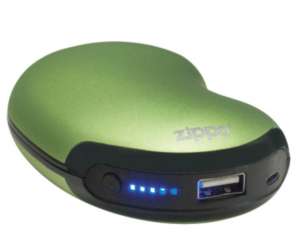
A new favourite of ours is the slim and sleek Zippo HeatBank that doubles as a hand warmer in cold weather. Pretty neat, and lasts for ages (choose three or six hour packs).
Keep your valuables safe
Another common fear when travelling alone is getting your belongings stolen. No one can fully relax and enjoy time swimming, for example, without letting go of the fear that a stranger will slip away with your personal possessions.
You could carry with you quality waterproof containers that can go into water. These double as food containers when you’re travelling and saving on buying out all the time. Alternatively, you can leave your money and valuables in the hotel room, but use a safety deposit box if possible.
With hotels, it is important to take extra precautions. It is not uncommon for things to be lost even when they are in the drawers, seemingly safe. A smart tip to ward off thieves from your room is to hang up a “do not disturb” sign after leaving your room.
Coming to London? You might be interested in the chic but great value Point A Hotel in Shoreditch. Take a look at our review
Also, by leaving the television turned on, anyone is able to trick potential thieves into thinking that you have not left in the first place.
The best bet to keep your money and fancy jewellery safe is to only carry enough money with you for food, taxi, accommodation and tours. Leave all the luxurious bling-bling behind.
As a matter of fact, it is best to not put on fancy necklaces, rings and earrings. Don’t attract unnecessary attention – better safe than sorry.
Do not be afraid of solo dining
Many people are anxious to dine alone. It’s common to feel like sitting solo in a restaurant makes you seem desperate or ‘sad’. But, it’s not uncommon to witness people sitting by themselves, enjoying a coffee or a meal and reading a book.
So, let go of the irrational fear and embrace solo dining! If it is too uncomfortable to go to a fancy dinner, consider a smaller coffee place or coworking cafe and opt for a counter seat or a seat at the bar.
To keep yourself occupied, take some reading materials with you or maybe a laptop to do some research about the local must-see things.
All in all, travelling alone can be a truly empowering and a unique experience. At the end of your trip, you will certainly feel like a changed person full of new experiences and interesting stories.
We’d love to hear your stories and tips – drop us a line in the comments below.
We’ve previously talked about great attributes coworking cafes have. As freelancers and digital nomads ourselves, we’re always on the lookout for coworking cafes that offer key ingredients we need for a productive day away from the home office.
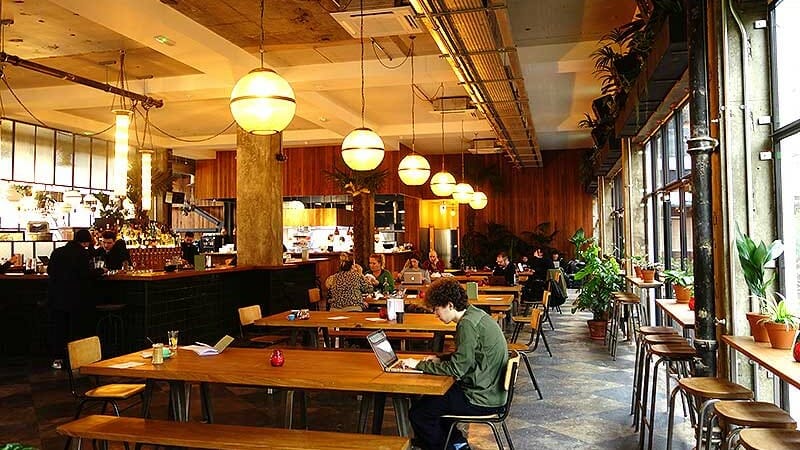
The best coworking cafes we frequent all look great and offer a nice, comfortable space to work in, the sound is just right, as is the vibe. And of course a coworking cafe needs decent WiFi and power outlets.
Cooper and I have always mostly hung out in north / east London, and we’ve got a few of our favourite coworking cafes in this part of the city to share with you here. Of course, if you suggest others, please do let us know in the comments.
Our favourite coworking cafes in east / north London
Mare Street Market, E8 4RU (London Fields)
My cool friend Rosie introduced us to this lovely east London destination. I’ve never seen anything like it! Mare Street Market is nothing short of what you’d expect from the excellent area that is Broadway Market and London Fields. The space here is huge, with a stylish bar in the centre of it all, and smaller counters or stores around the edge of the space, including a podcast studio, florist, record store and café.
Mare Street Market offers long benches for working on, and an ambient outdoor area. The food and drink selection is great.
Downsides of this coworking cafe space is that it can get very busy later in the day on weekends or when the sun is shining, and there’s not easy access to power supply. For an hour or two full of good cheer and stylish environment though, we love this place.
Tip: time your trip here with breakfast on Saturday morning, and a wander around Broadway Market, our favourite London market.
The Last Crumb, N16 0AS (Stoke Newington)
This is a lovely little coffee shop – bright, airy, dog friendly, and conveniently positioned in the heart of Church Street, Stoke Newington. The Last Crumb is a reasonable size and has spacious tables to work out, with some access to power sockets. The coffee and snacks here are good too.
They offer the space up for events too, so keep an eye out for networking opportunities or local activities that may inspire further creativity.
Barber & Parlour, E2 7DP (Shoreditch)
This is typically cool Shoreditch, with a delicious menu and great energy always. We’ve spent hours working at Barber & Parlour, mostly on Sundays. The vibe is relaxed, there’s plenty of space and different options for seating. Cooper and I have always found a spot by a wall with a power socket, and there’s internet here.
As for most good places, it does get very busy as the day draws on, so we usually get here early, do a bit of work and head off around lunchtime.
Barber & Parlour is positioned in the middle of Shoreditch, not very far from Spitalfields Market, so there’s plenty to see and do in the area, including the graffiti walk if you want to fill your Instagram feed.
Dudleys Organic Bakehouse, E8 2LQ (Dalston);
We’re sorry this wasn’t around when we lived in Dalston – Dudleys is a new addition to the high street, not far to walk from Dalston Kingsland overground. It’s a fabulous space with excellent snacks, coffee, tea, Wifi and nice atmosphere.
We love the vibe here. Sometimes the music could be turned down just a smidge, but as far as coworking cafes go, this is one of our new favourites!
UPDATE: now also a lovely little cafe on Stoke Newington High Street, open Monday to Sunday 8am to 5pm, right near The White Hart pub.
Google Campus London, EC2A 4BX (Old Street)
We discovered Campus Londona good few years ago, prior to moving over here. This is a fabulous place for start-ups, freelancers, solopreneurs, tech and creative minds who want to learn, network and develop ideas together.
Campus London has a huge cafe dedicated to remote working. The whole place is pretty inspiring, and while I’ve not been there for a while, it’s always in my mind. You can sign up to access the facilities and their events. Find out more here. The slogan, ‘come start something’ says it all – so if you’re in the same frame of mind as us, let’s have a coffee here and make things happen.
Husk Coffee and Creative Space, E14 7LW (opposite Limehouse station)
This is a lovely, spacious spot, designed as a coworking cafe. Husk offers a variety of seating options including couches, small tables and benches. Food and beverages are aplenty; there’s an events calendar here too, and they host English practice get-togethers. A hive of creative energy!
Really keen to know what you think makes a great coworking cafe, and importantly where do you suggest, in London or the world? Let us know in the comments…
If you’re a freelancer, digital nomad or telecommuter, you’ll appreciate the value of a great coworking cafe. Not to be mistaken for a coworking space (which we’ll look at soon here on the blog), coworking cafes offer the best of a coffee shop but with work-friendly benefits.
The flexibility of working from home or remotely is, well, brilliant. But sometimes we need to get out into a place where there’s other people. This can be because ‘home’ (wherever you call it) is noisy, or lonely. I’ve done some of my best work immersed in ‘the zone’ in a fave coworking cafe discovered around London, Vancouver, even Cairns in North Queensland.
The line between a coworking space and a coworking cafe is blurring, as some coworking cafes around the world are really set up very well for working in. Fresh Cup magazine has written about these trends happening in the USA that we found interesting.
If you have a favourite coworking cafe I’d LOVE to know about it – please drop details in the comments below.
Attributes of a great coworking cafe
We seek work-friendly spaces everywhere we travel, from Ibiza to Lisbon, the Gold Coast to London. What distinguishes a normal café or space where it’s technically possible to work, from a fabulous coworking café space that’s free, motivating and easy to work in?
In our experience, a cool coworking cafe has:
Space and cool design elements
Our very favourite coworking cafes in London and around the world inevitably offer a sensory and design experience that we can’t get in the home office. In fact, it’s recognised that coworking cafes and coworking spaces of the future that are to attract the most clientele, will boast cool design. We want to be creatively inspired, and it starts with the architecture and interiors of the places we’re working.
Hotel cafes and bars often do this really well. The Hoxton in Holborn and W Hotel’s Perception Bar in Soho London, and Room Mate Aitana in Amsterdam are great examples.
Essentials in a coworking café also include comfortable seating and a nice amount of space. Various options for working such as bench space, tables, seating at different heights and maybe even some sofa areas are also preferable.
Our favourite coworking cafes are bright, inspiring, interesting but ultimately cosy. They’re convenient, with easy access to transport and other amenities in a city we’re visiting or working in.
Delicious coffee and food (fuel!)
There’s nothing quite like the tantalising smell of fresh food and coffee while you work. I especially like it when I’m not having to cook it. That’s just me though.
A coworking café should offer great coffee and a range of food, from treats to lunch. Preferably at reasonable prices.
Energy and ambience
There’s a fine line between ‘just right’ and ‘too much’ in cafes targeting freelancing or digital nomads. Cooper and I need to find a place that plays agreeable music. This obviously might differ person to person. The best type of work soundtrack for me is smooth House or world music like Buddha Bar. I don’t want music blaring, but I’d like to be able to hear it and enjoy it.
Similarly, if the crowd in the café is too noisy, or there’s kids running around, I can’t work effectively.
My best experiences in coworking cafes are when the energy is buzzing and there’s other people working in there. Sometimes you can catch the right level of background activity like food prep, conversation and background noise that makes it easy to focus on the task at hand.
Dog friendly is always a bonus!
Easy access to decent tech
We’re talking about ‘working’ after all, and there are some basics that all remote workers will agree on:
Stable, quick, reliable internet
Inexpensive internet access (if not free)
A secure connection is preferable. That said, we have recently purchased a VPN to keep our networks private when we’re working out and about. Reputable firewalls and virus protection should also be implemented on your machines. For more on safety for digital nomads take a look at this helpful piece from Traveling Lifestyle
Plenty of accessible power outlets – the scramble for the only corner in the room with an electrical socket is never fun.
Know a spot that fits the criteria? Also keen to hear about what other elements you consider are crucial in a work-friendly coffee shop. Do please share in the comments.
If you’re seeking some creative inspiration you can’t go past these 7 best travel blogger European destinations!
Travelling to beautiful destinations is an inspiring activity for everybody, but if you are a content producer chasing wanderlust, there are some places that stand out.
Here’s a list of the best travel vloggers and bloggers Euro destinations, courtesy guest contributor Rebecca Brown.
The best travel blogger destinations in Europe – 7 faves
There is something to say about every new, and even old place you visit, since sometimes you see things you’ve already seen in a different way.
However, some places are better than others.
Lisbon, Portugal
Portugal has many hot spots, and its beautiful capital is definitely one of them.
Perfectly combining the new with the old, Lisbon welcomes all kinds of creative travel vloggers and bloggers.
Nostalgic and romantic writers can find inspiration while exploring the city’s beautifully arranged streets and admiring the mesmerising landscapes from the many viewpoints strategically located throughout the city.
Foodies have the chance to indulge in memorable culinary experiences without having to empty their pockets.
There are many affordable restaurants and cooking classes a passionate blogger can enjoy while in Lisbon. Cervejaria Ramiro is one of the locals’ favourite gathering places that recently became famous among travellers as well.
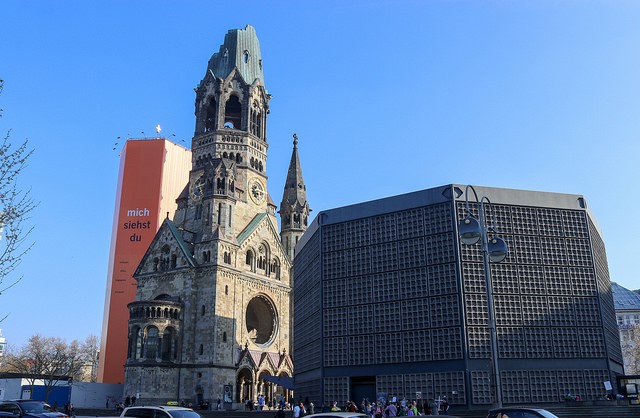
Bloggers who are passionate about travelling and history can’t miss seeing Berlin, one of Germany’s most interesting and intriguing cities.
The number of museums and historical monuments is fantastic, giving history enthusiasts the thrill they are looking for.
Art, great architecture, as well as shocking stories from WWII and other crucial moments of Europe’s past are also present everywhere in Berlin.
Mallorca, Spain
Do you want to share stories about sunny days, splendid beaches, cocktail recipes, and mouthwatering dishes, but you are also interested in cultural and historical places?
Then, visit Mallorca.
The island is paradise for travellers who dream about being caressed by the sun, enjoying water adventures, and having real island fun.
But culture and history aficionados are also welcome in Mallorca.
Palma, the capital city, as well as the great number of castles, fortresses, and historical monuments are always a delight for curious visitors. And the Palma Cathedral is definitely an inspiration for all bloggers and Instagram users who love sharing their travels through amazing photos.
Hvar, Croatia
Since we are talking about islands, Croatia is worth mentioning because it has many special pieces of land where passionate bloggers can spend memorable holidays and write great posts.
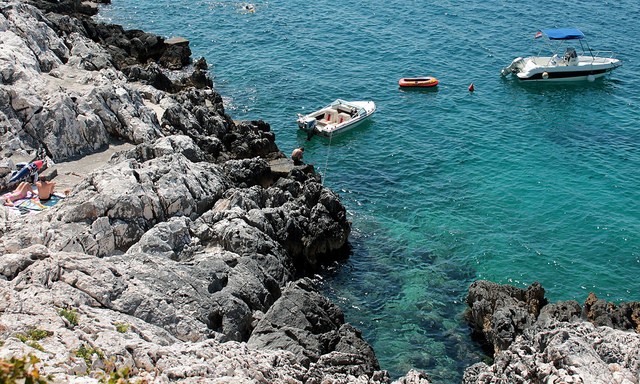
Hvar and the little, beautiful Pakleni Islands amaze the eyes of all visitors with spectacular landscapes and a multitude of secluded beaches surrounded by crystal-clear waters filled with thrilled snorkelers.
Paris, France
Whether you are interested in romantic walks, want to indulge in some of the world’s most interesting cuisine, or dream about following the steps of famous artists, Paris is the perfect destination.
The city was an inspiration for many great minds, and just wandering around its small alleys can give you enough beauty for your articles.
But if this is not enough, enjoy an artistic adventure at the Louvre Museum, climb the famous Eiffel tour, visit the imposing Notre Dame Cathedral or get in touch with your childhood at Disneyland.
Algarve, Portugal
Portugal is one of the best travel vloggers and bloggers’ countries, not only thanks to its fascinating capital, Lisbon, but also because it has so much natural beauty.
The Algarve is a region that should be at the top of your list if you love writing about your adventures.
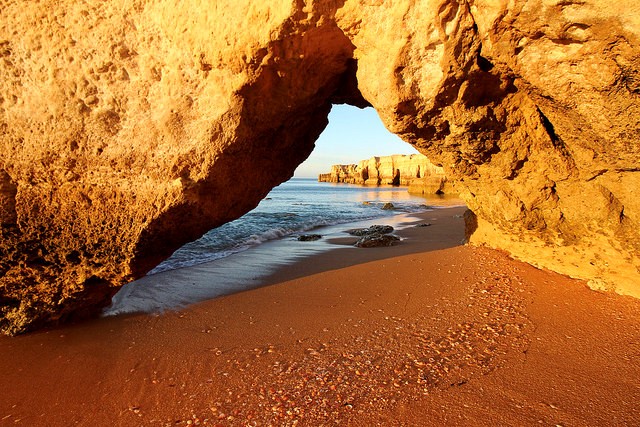
Not only will you find some of the most beautiful beaches in the world here, but the Algarve promises to amaze you with breathtaking landscapes, small, picturesque villages, and authentic cities.
Tavira is a place you shouldn’t miss if you want to catch a glimpse of the village culture, and Lagos is a great city to observe daily Portuguese life.
If nature is your cup of tea, make sure you explore the Ria Formosa National Park, and if you are interested in spending some time by yourself and admiring the surrounding beauties, check out Ponta da Piedade and Cape St Vincent.
These are just seven of the beautiful European destinations a blogger should visit, but there are many more places waiting to be explored and added to your travel posts.
About the author
Guest contributor Rebecca is an expat and translator by day, and a traveller mostly at night. She is an expert on living with jet lag – and packing in tiny suitcases. You can read more of her exploits at RoughDraft.
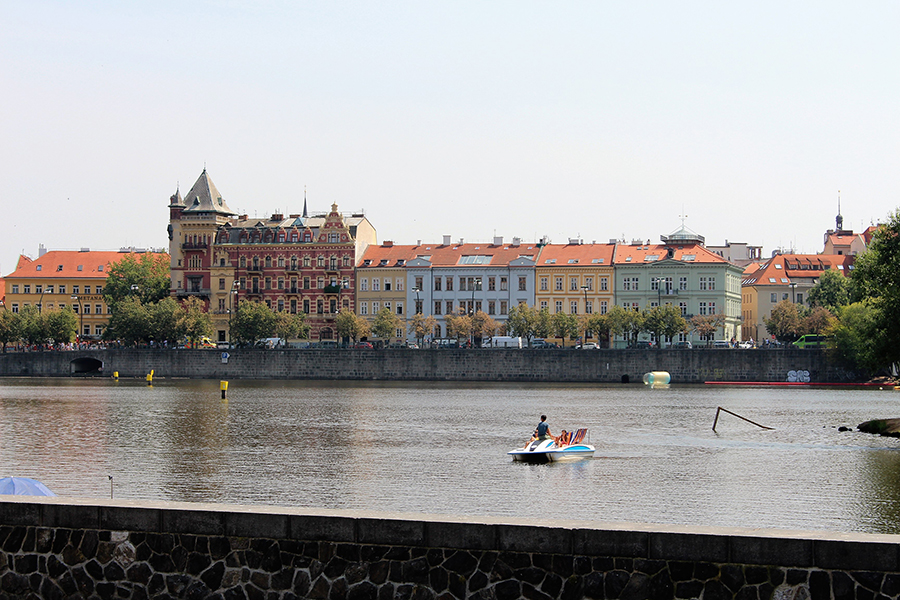
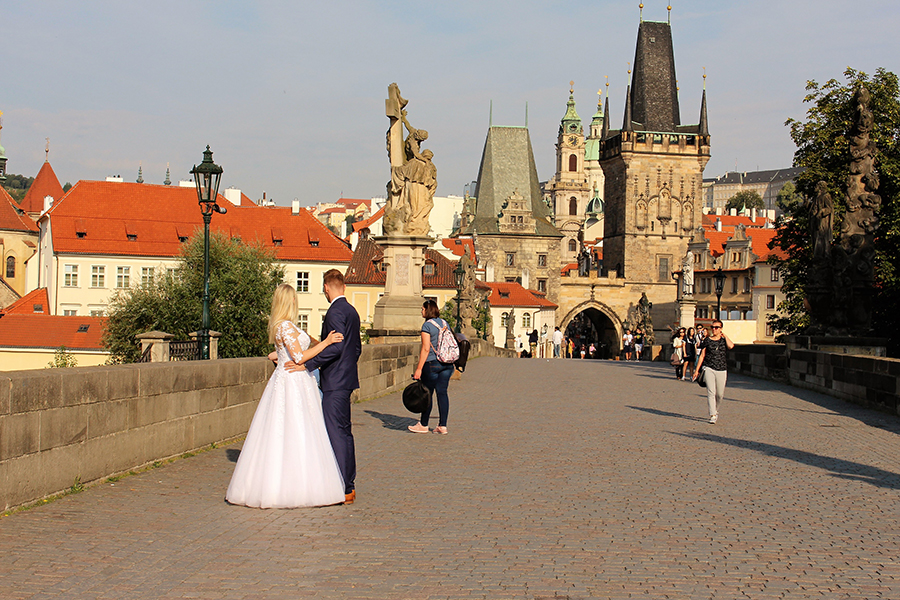
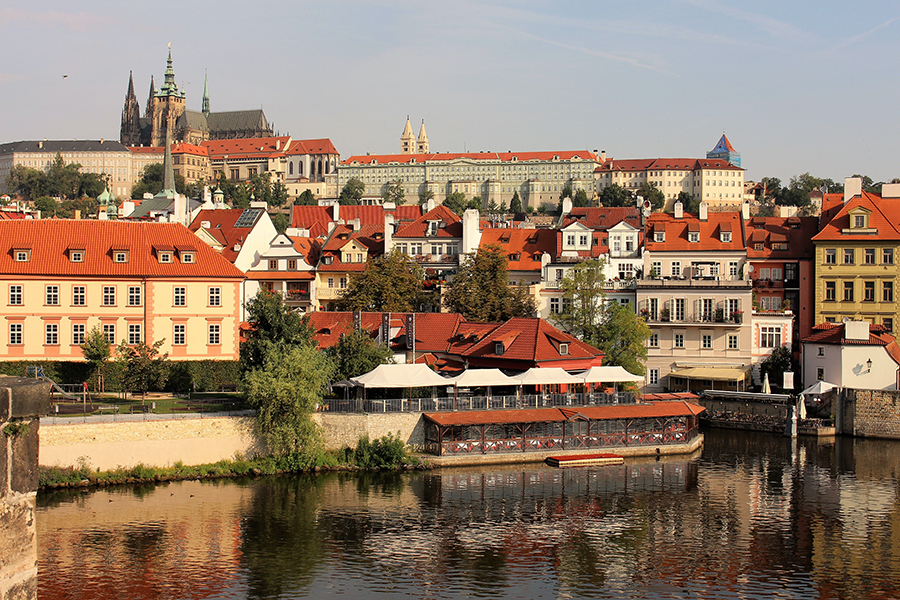
A welcome cool breeze skimmed across the Vltava, as dozens of paddle-boat revellers and a few small ferries floated past me on excursions along the Prague waterfront. I’d arrived ahead of Cooper for our weekend in Prague for travel bloggers – or, with a creative content twist; you see, we’re on our way to another annual TBEX conference, and I couldn’t be more excited to be in the Czech Republic.
It was Friday afternoon about 6.30pm and after a scorching hot day fighting through crowds for a glimpse at the city’s famously pretty highlights, I’d stumbled into a stunning yet quite secluded spot by the water. The place was otherwise anonymous, crudely labelled ‘Riverside Bar’ on a blackboard out the back of the place.
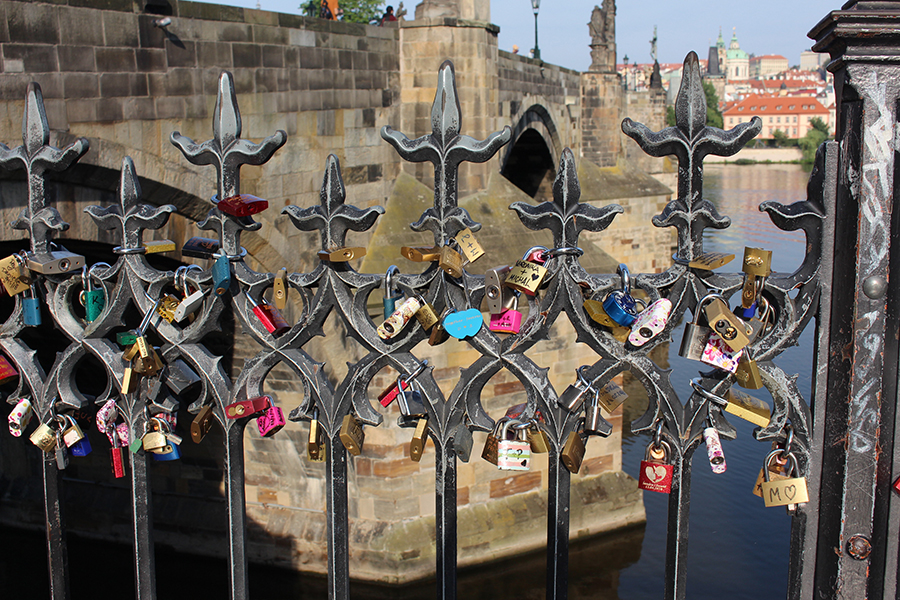
The shabby-chic joint served cold drinks and was streaming chilled House tunes – right up my alley. Similar name as a luxe and expensive Brisbane counterpart (that admittedly I love), yet cheap, romantic, less sweaty and overlooking the city’s medieval structures including the Charles Bridge. With a flavoursome gin and tonic sparkling in my eyes and the sun beginning its descent across the Czech Republic, it occurred to me, this is the life. I could be an a$$ and hashtag it ‘blessed’, but…
For the first time in months, I’d say, I sat without thought, just observing in peace.
It’s been so so busy this year and I need this weekend in Prague. I don’t like to overuse the word ‘busy’ – we tout a saying in my team at work about how ‘busy’ has become an excuse, often meaning that actually, you believe your ‘stuff’ to be more important than someone else’s, when often we have no idea what others are up against, nor do we remember to be respectful of it.
That said, while I’ve tried hard to balance things, it’s been tough, and writing or blogging for myself and for this lifestyle and travel space is the last thing I have energy for. Yet, it’s in my heart. And away from the hustle and bustle of Prague’s overcrowded tourist centre (not to mention my ‘other’ routine life), yet with its best bits in my line of sight, I felt inspired again.
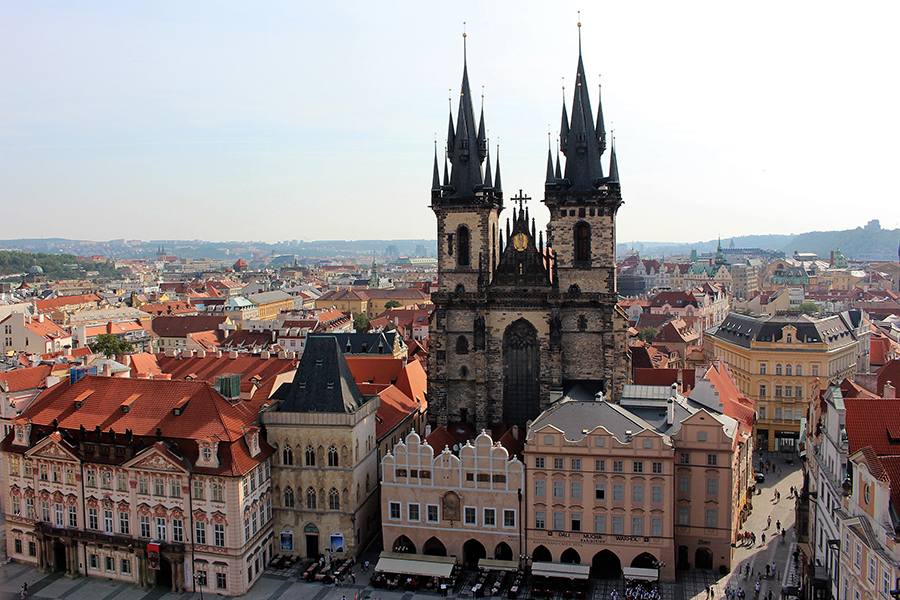
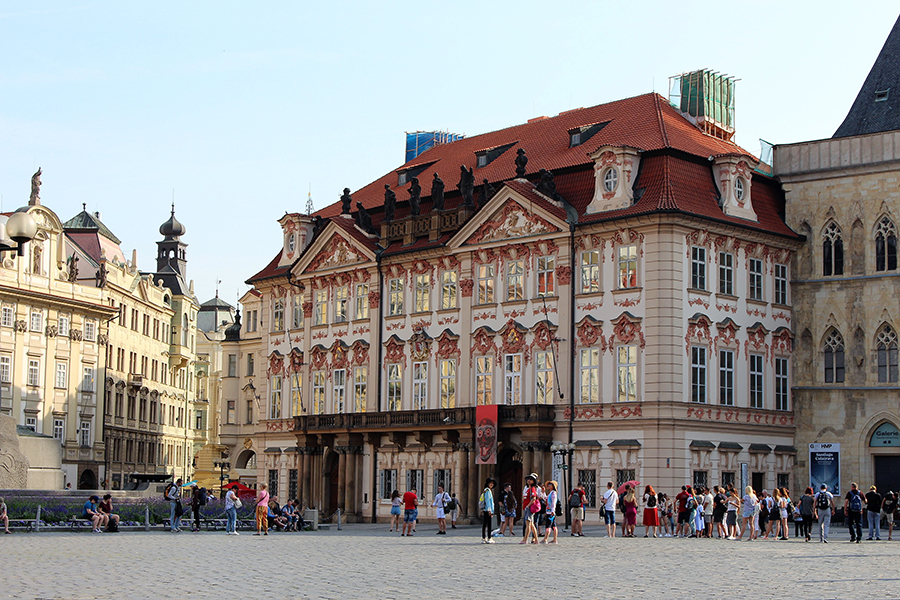
While I moan about the crowds (apparently Prague is the fifth most visited city in Europe), I must admit to having a moment on Friday afternoon. I was wandering the UNESCO World Cultural and Natural Heritage listed Old Town Square, and as I gazed around me at the colourful, historical architecture and felt energy of so many who had come before, my breath caught and tears came to my eyes. It was rather overwhelming and took me by surprise. Probably nothing to do with being deliriously tired following a work social the night before and a 6am flight.
In all seriousness, it’s as beautiful as I remember it, and more than that, how lucky are we to have the chance to be in such places, so far from home?
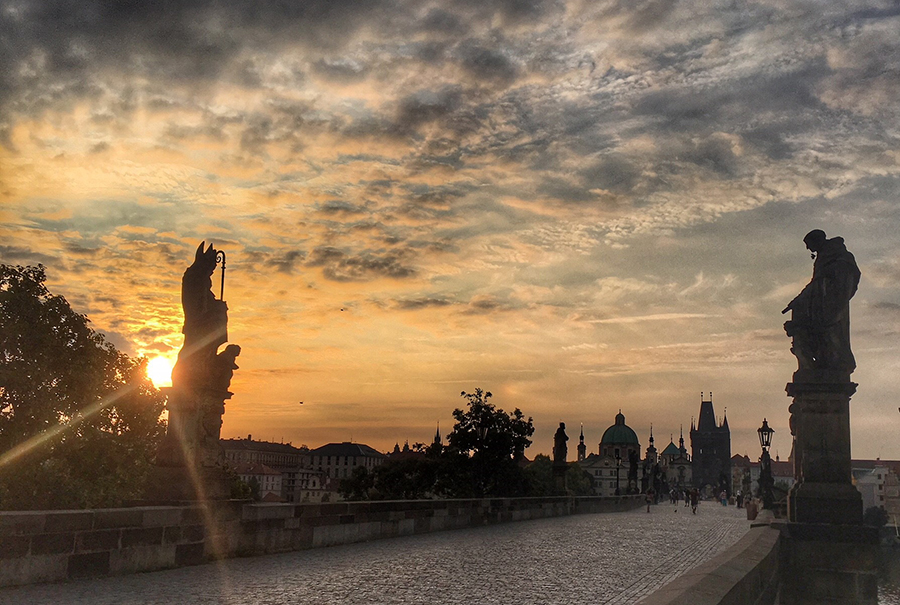
Beyond the selfie sticks and those taking more photos of themselves than their surroundings, the depths of crowds attempting to enter popular areas, and hundreds of tourist groups dripping in deep-fried ice-cream-stuffed doughnut cones (yep it’s a thing, although not even Czech, as I understand it), there is palpable magic in this city of red rooftops and a thousand spires, wooded hills, romantic views and influence from generations gone by.
Founded in the latter part of the 9th Century, Prague became the seat of the kings of Bohemia. The city flourished during the 14th Century and for hundreds of years was a multi-ethnic city with an influential Czech, German and Jewish population.
From 1939 the country was occupied by the Nazis and while Prague’s structures remained relatively undamaged during the war, most Jews either fled the city or were killed in the Holocaust. The German population was then expelled in the aftermath of WWII.
Most of us remember the Prague that was under Communist rule for over 40 years, rarely visited by tourists until after the Velvet Revolution on 17 November 1989. Freedom meant a huge economic boom and an influx of delighted visitors from then on, which only increased after the Czech Republic joined the European Union in 2004.
As mentioned, we’re destined for TBEX Europe 2018, in a place I’d never thought to have visited, Ostrava. That said, as travel bloggers and explorers we are very excited to see somewhere new! Preparing and in Prague for the weekend, Cooper and I wanted our schedule to be part (re)discovery, part relaxing, part planning for networking and the conference (which I blogged about for the TBEX Events site recently).
We stayed about twenty minutes walk from the city centre, at Hotel Kinsky Gardens in a quiet Prague neighbourhood, yet with the convenience of supermarkets, shopping mall, pubs, a delicious tapas restaurant called Miro, and tram stop not five minutes’ walk away.
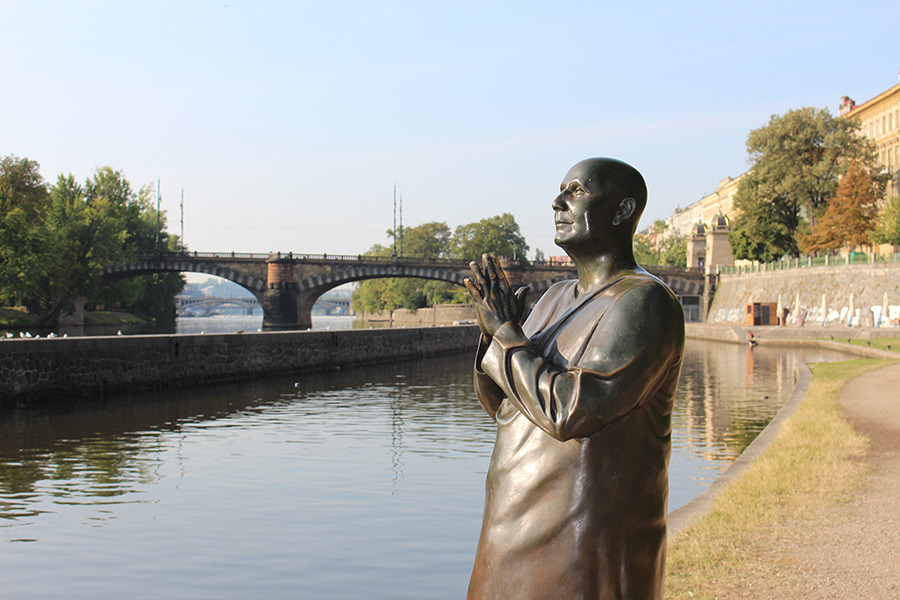
The river precinct I came to love (including the ‘Riverside Bar’, gorgeous new waterfront restaurant opening this week Kalina Kampa and Belle Vida Cafe) was just ten minutes walk from our accommodation, and is perfect for anyone who has done the central Prague tourist bit and is happy to indulge in the views away from the chaos.
On Saturday night I hosted my very first TBEX meet-up (this is my sixth TBEX conference so I’m excited to have taken this step).
We met up with four locals to Prague and five visitors from as far as America, Costa Rica and another conference attendee coming from England like us. We ran the plans through the conference Facebook group and Katie (an American expat living in Prague) chose a cool pub on a hill with a view for our group’s meet-up, and Prague local Veronika assisted with finding an impromptu dining option so we could all hang out and try local cuisine.
It was immensely fun to meet other travel bloggers and content creators in Prague this weekend and part of the reason we’re so pleased we continue to develop our little corner of the web here, for love and a hobby.
Prague is easy to do as a city break – you can walk around the old town, to the castle, up to view points, catch trams to gardens, boat-ride around the Vltava, enjoy a little jazz, join a free walking tour and get cultural in museums.
A weekend in Prague: practical tips
Be careful of taxis, they can be unregulated and rip you off. Go with a pre-booked service or use the trams and trains as they are very well run and cheap, but DO buy a ticket as if you get caught without one or if you have not validated it the fines are hefty.
Try the beer (it’s the home of Pilsner, after all), and as always, get out of the tourist areas of a cheaper experience when it comes to food and dining.
Take your money out of an ATM that’s associated with a bank and be careful of the exchange outlets that say ‘zero commission’ (usually they are hiking up hidden charges).
Importantly, be curious. In our case, this weekend in Prague was for us as travel bloggers: an unexpected low-key treat and reminder of how much I’ve gained from travel – the people met, surprising and inspired moments, lands wandered at early (or late) hours, and the fulfilment that pursuing creativity provides. We are lucky, but I too am grateful.
Onwards to Ostrava…
Got a question on where to stay, how to get around or things to do in Prague? Drop us a line in the comments – we love to chat and share
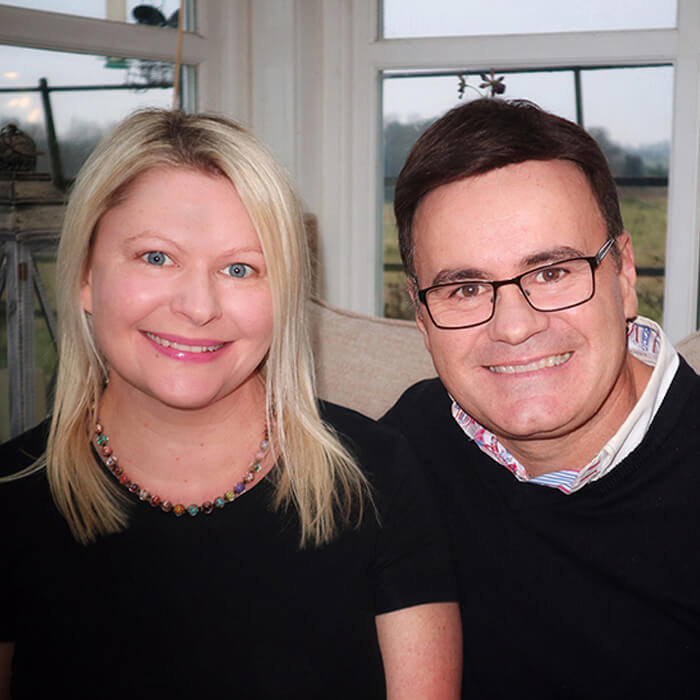
Hi, we’re Sarah & Cooper. Welcome to Travel Live Learn! We’re Aussie expats currently living in the UK (for the third time!) with our adorable Westie, London. Our mission? To inspire you to embrace a life of adventure—whether it’s travelling longer, relocating to the UK or Europe, or exploring the freedom of remote work and digital nomadism. Enjoy your time on our site! We'd love to stay in touch: subscribe for our weekly stories, updates and remote work job opportunities direct to your inbox.
TLL SHOP!
Grab our guides for 2025:
Master House Sitting with Our Must-Have 101 Essentials eGuide! Buy It Here
And, 7 Essential Strategies for Maximising Your Use of ChatGPT eBookBuy it here
Also, Visit Our Amazon Storefront! Shop Here!
To provide the best experiences, we use technologies like cookies to store and/or access device information. Consenting to these technologies will allow us to process data such as browsing behavior or unique IDs on this site. Not consenting or withdrawing consent, may adversely affect certain features and functions.
Functional
Always active
The technical storage or access is strictly necessary for the legitimate purpose of enabling the use of a specific service explicitly requested by the subscriber or user, or for the sole purpose of carrying out the transmission of a communication over an electronic communications network.
Preferences
The technical storage or access is necessary for the legitimate purpose of storing preferences that are not requested by the subscriber or user.
Statistics
The technical storage or access that is used exclusively for statistical purposes.The technical storage or access that is used exclusively for anonymous statistical purposes. Without a subpoena, voluntary compliance on the part of your Internet Service Provider, or additional records from a third party, information stored or retrieved for this purpose alone cannot usually be used to identify you.
Marketing
The technical storage or access is required to create user profiles to send advertising, or to track the user on a website or across several websites for similar marketing purposes.