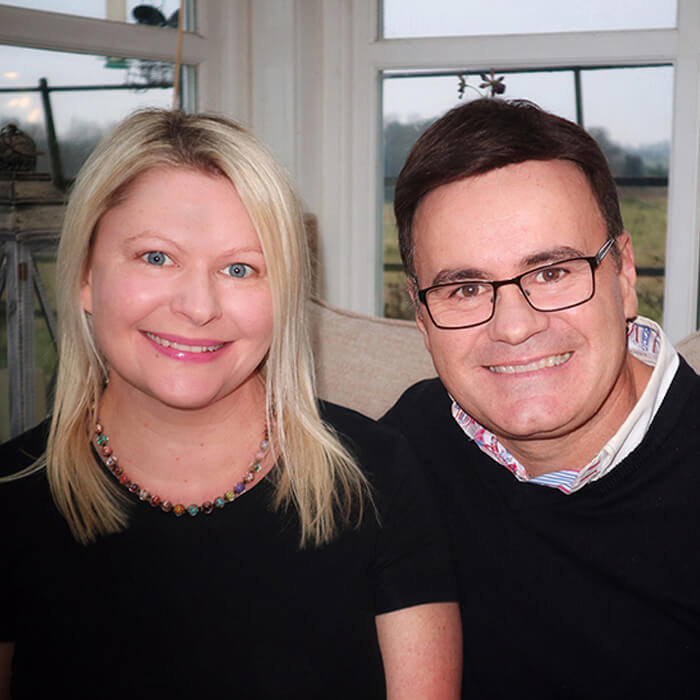
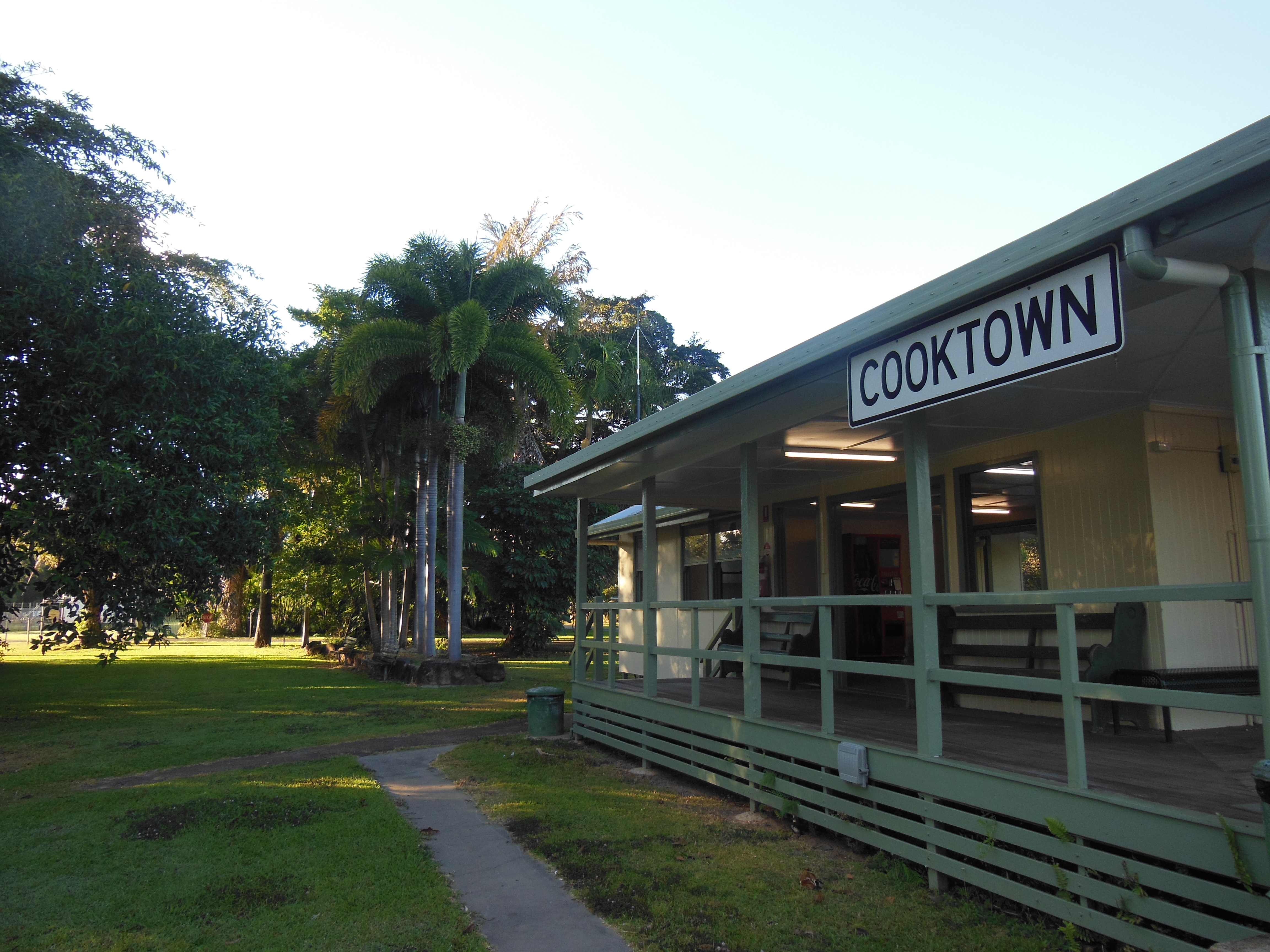
Cooktown is one of those unique places in the world brimming with truly colourful characters from all walks of life. A quintessentially Aussie town of 2000 people and a destination of unspoilt beauty; here you may discover the very best of Australia’s coast, rainforest, bush, savannah and desert landscapes, which remain largely unchanged since the days when Captain Cook and his crew from England first spotted land.
From country folk donning Akubras, and the Indigenous locals proudly showing visitors around their traditional lands, to those who have migrated far north for a break from high-powered city lives, and bar staff with their thick Scottish accents − everyone’s got a story and they’re happy to tell it (or listen to yours). It’s difficult to resist conjuring romantic notions of living in a place like this, A Country Practice style (Aussie TV throwback reference!), as Cooper and I do consider little towns like Cooktown with much affection.
WHERE TO STAY – TRAVEL IN COOKTOWN
It’s actually mind boggling to discover that a little town in the far northern reaches of Australia might offer such delightful facilities, and the Sovereign Resort Hotel far surpassed our expectations. I mean, it looks lovely on the website − and honestly, it’s just as nice, if not nicer! There’s a shuttle service to and from the airport, the prices are great, inexpensive car hire available on-site, accommodation options are available depending on your needs, staff (particularly Sally) are absolutely lovely, rooms clean and spacious, restaurant divine, pool is perfect and you couldn’t ask for a more convenient (or pretty) location in the centre of town. Highly recommended, would stay here again without hesitation. Book online: Sovereign Resort Hotel
While it’s the traditional town-Down Under experience you’ll enjoy in Cooktown, what may surprise you is the interesting history that seeps into every street corner, along the waterfront, trailing up and down mountainsides, throughout pubs, the post office and port. Cooktown has endured its ups and downs in terms of boom-times, but will forever maintain a critical position in Australia’s story.
In 1770, as the traditional owners of the land, the Guugu Yimidhirr people, watched on with trepidation, Lieutenant James Cook and his crew ran their ship, Endeavour, aground. They had discovered Botany Bay in New South Wales (April 1770), and Seventeen Seventy in Queensland (May 1770) but on the way up towards Australia’s tip, the Great Barrier Reef seriously damaged the hull of the ship, and they had to stop here for 48 days (the longest onshore stay of this particular voyage of discovery). Cook named only one river in Australia, that being the Endeavour here in Cooktown, after the vessel his crew were able to save in these parts. Of course, he returned home to England and Australia would later be officially founded by Captain Arthur Phillip in 1788, but Cooktown was already firmly plotted on early maps of Australia by then.
The settlement gradually flourished and just under 100 years on, Cooktown was in fact the second most thriving town in Queensland with one of the busiest ports, all due to the Palmer River Gold Rush (1873). Stores, pubs, banks, gambling and even opium dens were flourishing in town, while 15,000 miners (10,000 being Chinese) prospected for gold along the banks of the Endeavour. Several buildings, many treasured artefacts, and most likely a few ghosts, remain here from that colourful period.
The Gold ‘rush’ was just that, a fleeting period in time which would indeed come to an end, leaving the future of Cooktown hanging delicately by a thread. I recently discovered a Sydney Morning Herald article from 1 November 1941 where the journalist, Hugh Henry, described the then “Ghost town of the North”:
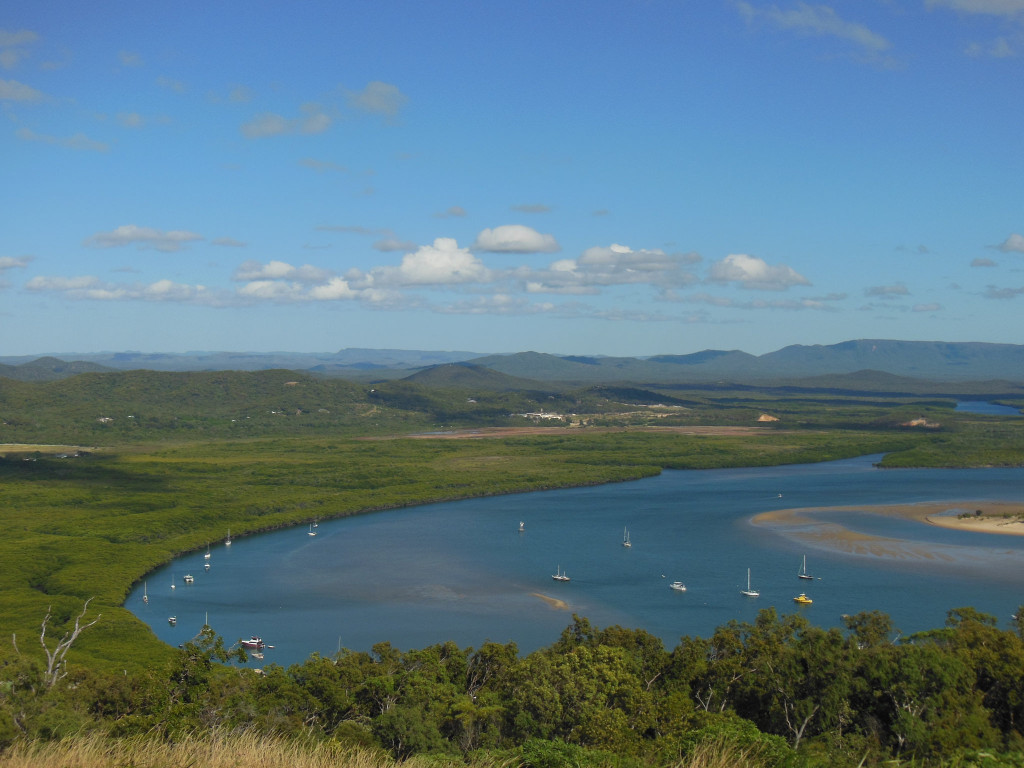
“… A ramshackle wharf now seldom visited by large steamers; a dilapidated township with fine public buildings fast falling into decay, while hotels alone continue to do a thriving business; and a signal-station hill commanding one of the loveliest river views in Australia a wide estuary of sapphire gleaming under a sky of kingfisher blue. That is Cooktown today. Australia is a young country and it is natural to think of its history as one of uninterrupted progress. But no traveller can go far in Australia without being impressed by the number of towns with a record of past prosperity, and a present so deteriorated that it is difficult to establish any connection between them as they have been and as they are. Among Australia’s ghost towns Cooktown, on the far north coast of Queensland, occupies a prominent position. Tile residents of Cooktown reject any suggestion that their native place is dead, but in the next breath they are eager to discuss ways and means of resurrection.”
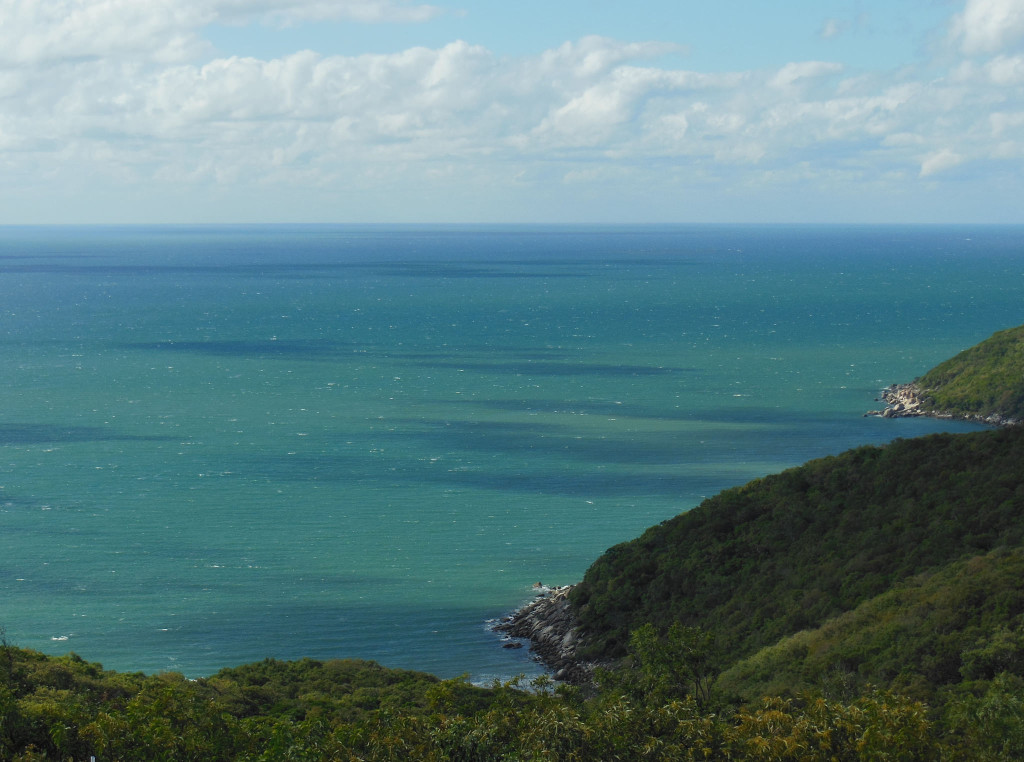
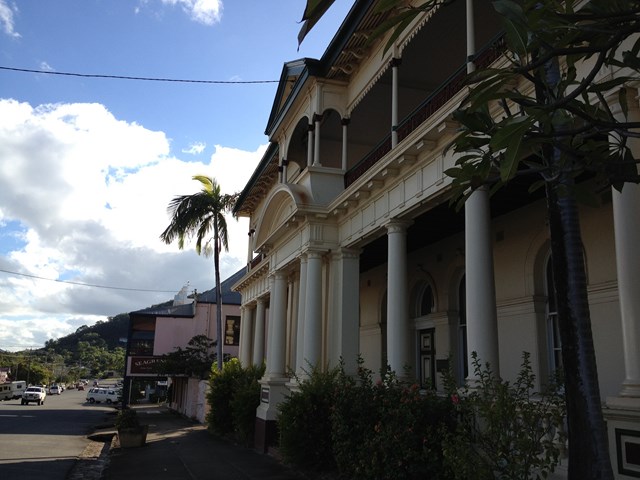
While Cooktown isn’t home to as many as its hey-day of the late 1800s, it does boast a friendly population of interesting people from all over the world, and indeed is a delightful place to visit. There’s a grand old building resembling an American plantation home on the main strip that’s for lease − I’m in love with it! Various glorious old structures are located around town, and make for a refreshing change to the mundane contemporary constructions that saturate most contemporary Australian locations. Equally beautiful is what Mother Nature has blessed this part of the world with − sublime coastline, divine hill-top views and inspiring landscapes as far as the eye can see.
I could literally go on and on about how many travel and recreational options there are on offer here, and as we’ve mentioned in our video coverage of the town, we’ve only just scratched the surface. It’s certainly a little place with not only a big heart, but history and adventure to boot. However, in pursuit of learning, combined with travel, here’s a few things we’d suggest you keep an eye out for:
GETTING TO COOKTOWN
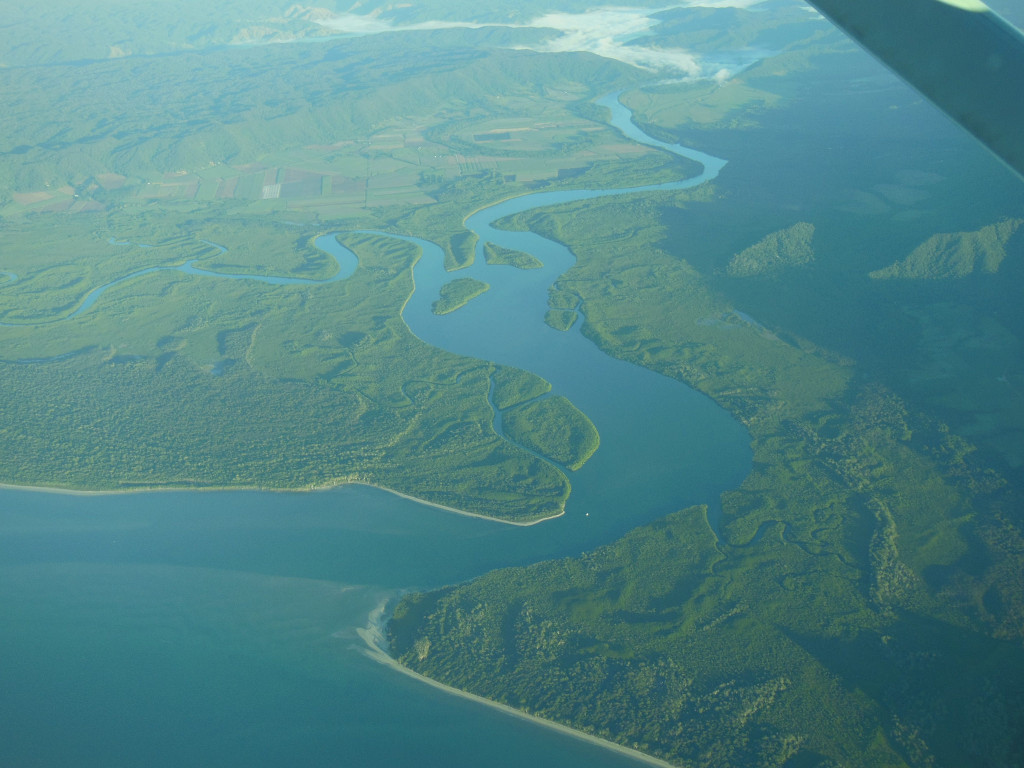
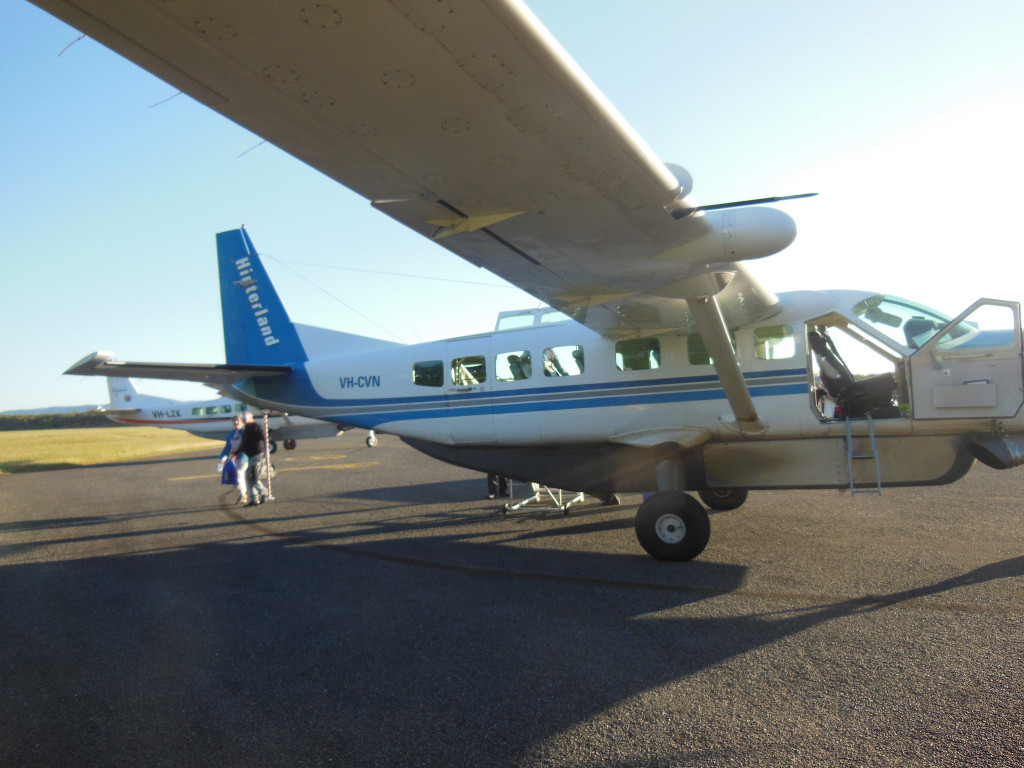
Honestly, one of the top reasons to travel in Cooktown and around top end in the first place is for the opportunity to fly with Hinterland Aviation. The team (both in Cairns and Cooktown) are friendly, professional and fun. There’s free WiFi in the Cairns terminal, plenty of flight options per week to choose from, and while you can drive to Cooktown in around three hours, this service is convenient, easy and value for money. The scenery between Cairns and Cooktown is awe-inspiring, and seeing it from this vantage point − through the sizeable windows of a comfortable charter plane − is really a once-in-a-lifetime experience, and should be on everyone’s bucket-list. More at: Hinterland Aviation
Just 45 minutes, scenic flight − it’s flexible, convenient, great value and private − save time, energy and enjoy the landscape in a way that showcases its ultimate beauty− from above!
James Cook Museum
Being one of Australia’s most historical townships you’ll find many displays and places to visit to learn about Cooktown’s past. Some of the town’s old colonial buildings can still be seen today and walking down Charlotte Street you’ll note great examples including the old bank building built in 1891 for the Queensland National Bank, the Post Office (1887), The Daintree Divisional Board Council Hall, now the RSL (1885), Jackey Jackey Store Building, now a café (1886), The Sovereign Hotel, now The Sovereign Resort (1874), and Seagren’s Store, now Seagren’s Inn (1880). Additionally you’ll not want to miss the beautifully restored convent building and a former boarding school for girls, now home to the James Cook Museum on Helen Street. Built in 1889, it features displays of an anchor and cannon from the ship Endeavour, some of Captain Cook’s diary extracts, and fascinating stories about life in early Cooktown. Entry is $10 (adults).
If you enjoy this museum and its historical offerings, you may also be interested to take a look at The History Centre on Charlotte Street (opposite The Sovereign Resort Hotel) which currently houses the Cooktown and District Historical Society, award-winning interpretive historical displays, and family research facility. Entry is $5 (adults).
Love old photos? Here are some fascinating images from old Cooktown.
Grassy Hill
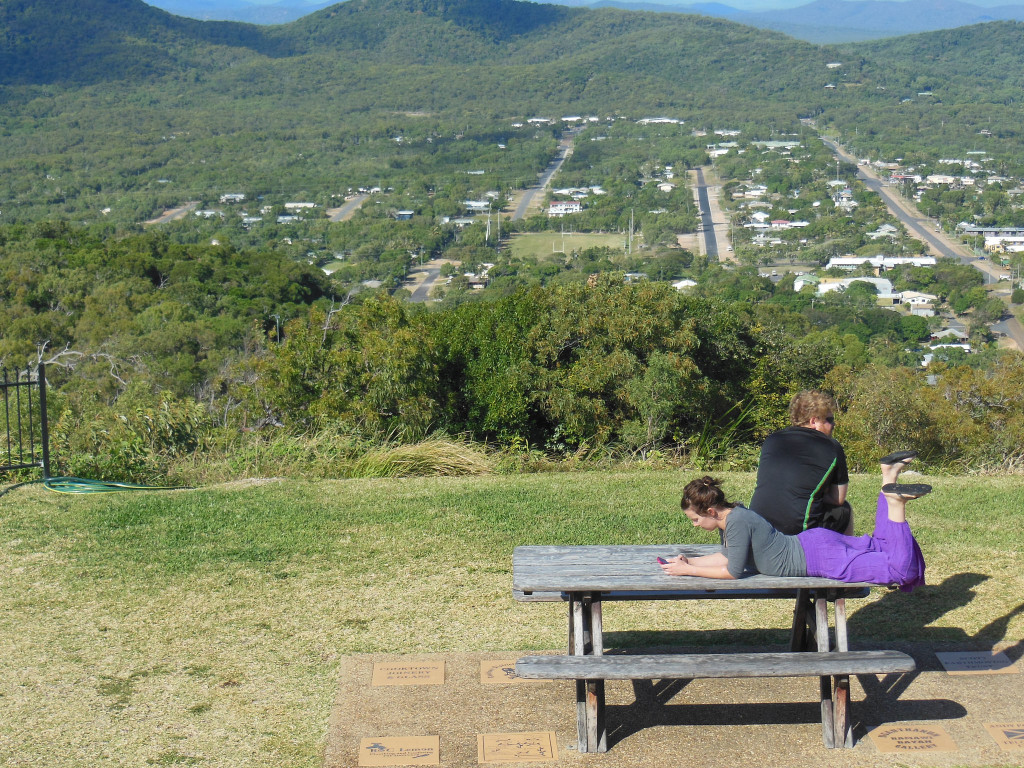
The lookout on Grassy Hill with its 360 degree views of Cooktown, coastline, inlet and the sprawling hills in the distance is one of the area’s most popular attractions. The landscape seen today from the top of the hill has changed little since Cook and the crew of the Endeavour climbed Grassy Hill in 1770 to view the surrounding reefs. To most of us, Queensland’s Great Barrier Reef is famous, attracting tourists from all over the world. But to Cook and his crew it would have presented a real danger. From this vantage point, Cook would have been able to plot a safe course through the dangerous reefs to get the crew safely on their way back towards home.
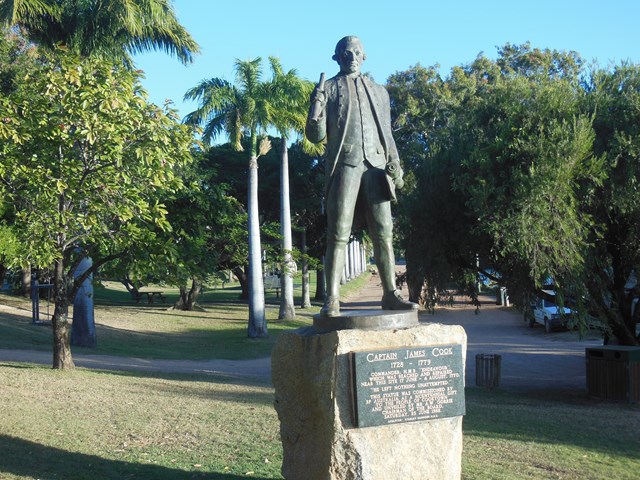
The Cook Monument
Cooktown is rich in history and the Cook Monument commemorates Lieutenant James Cook’s landing on 17 June 1770. It was on this location the local Aborigines would have watched with caution and curiosity as the crew beached his ship the Endeavour, tethering it to a tree after its wooden hull was damaged on the reef south of Cooktown. It’s been told that because white people had never been seen before, the Aborigines thought Cook’s crew were ghosts! Interesting note: It was during this time that botanist, Joseph Banks, wrote the first European description of a kangaroo. How unique Australia must have seemed!
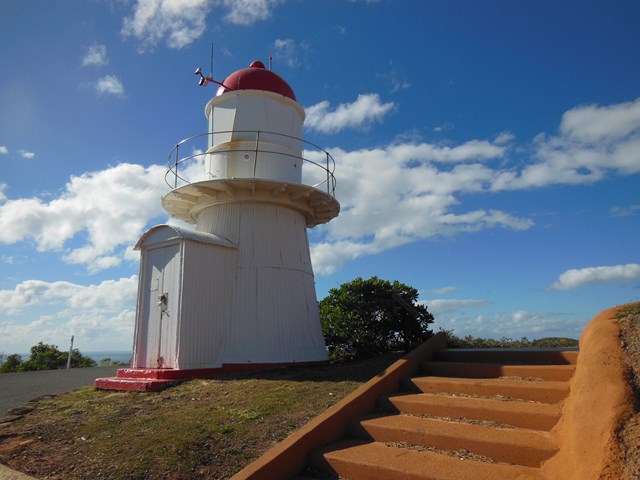
Cooktown Lighthouse
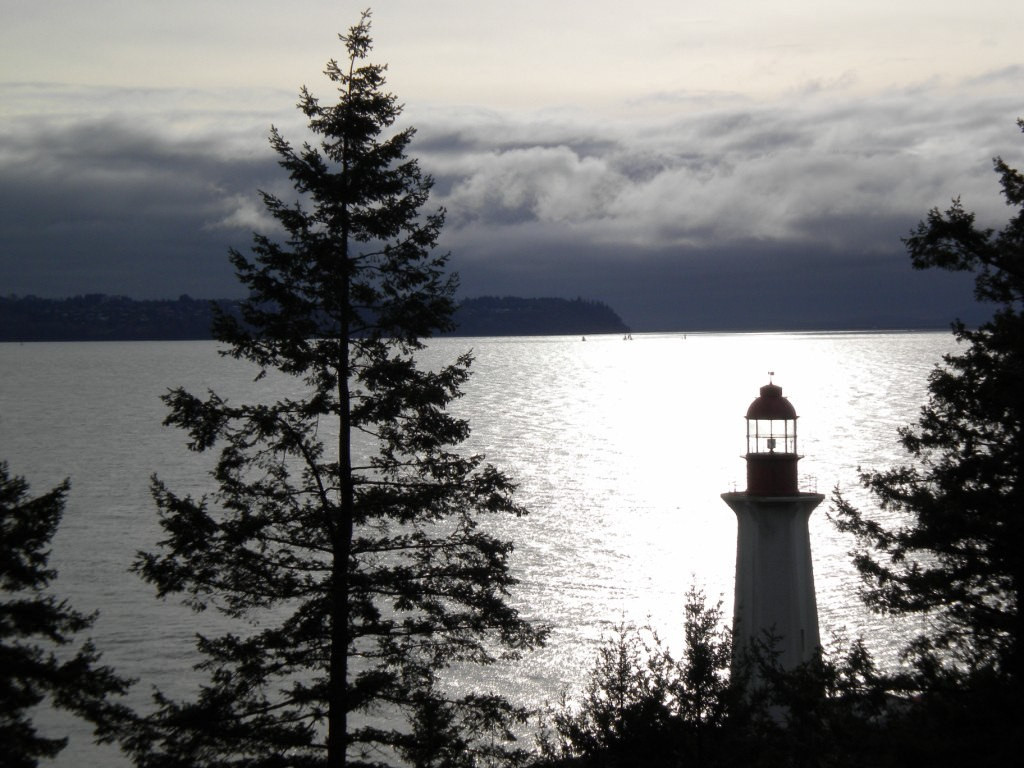
Cooktown Lighthouse on Grassy Hill was built in England and shipped to Cooktown, in 1885 to guide ships through the reef. Back then, Cook would have been very impressed by this technology!
Nature’s Powerhouse + Botanical Gardens
A two-minute drive from the town centre is the indoor Nature’s Powerhouse and historic Botanical Gardens. The Nature’s Powerhouse contains a stunning collection of works by local artists with a very strong emphasis on plants. The Botanical Gardens have a long history and were first established in 1878, only five years after Cooktown was established, and feature many of the plants used by the local Aboriginal people in their daily lives then and now. Many of the plant species were completely new to botanist Joseph Banks, who accompanied James Cook on The Endeavour and returned home to England with exciting clippings to study.
The Queen’s Steps
The Queen’s Steps were made for HM Queen Elizabeth II for her visit to Cooktown in 1970 to open the James Cook Museum, part of a yearlong celebration marking 200 years since Captain James Cook’s remarkable voyage of discovery.
The Cemetery and Chinese Shrine
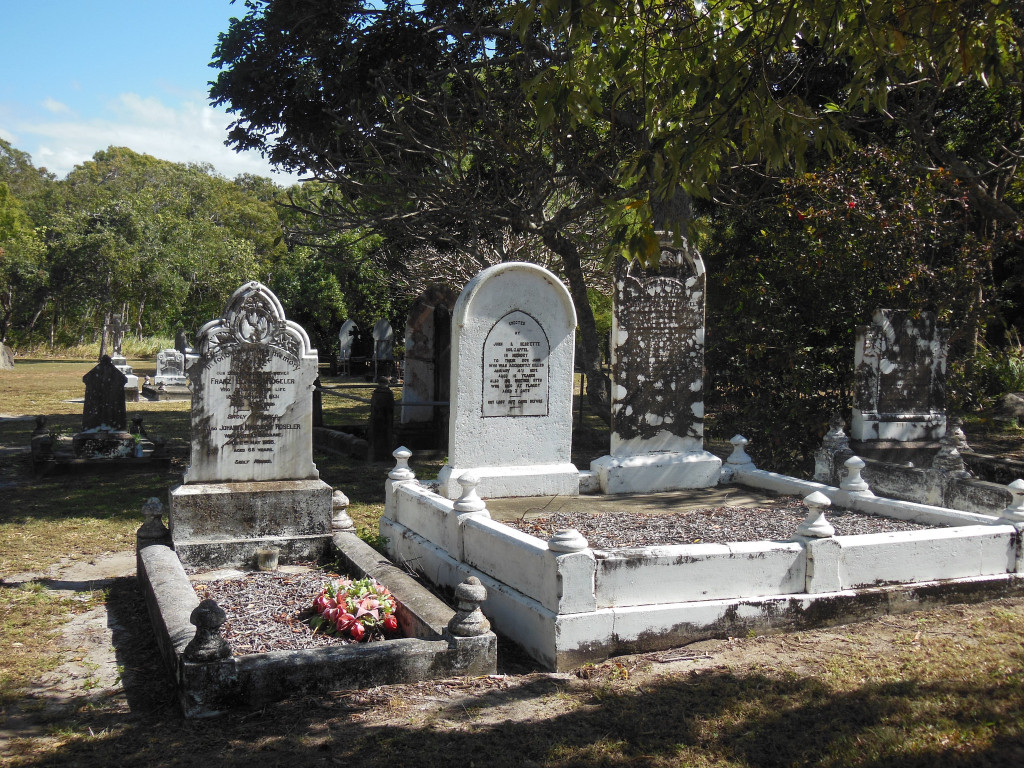
The Cooktown Cemetery and Chinese Shrine is just outside the centre of town, and offers insight into how tough life would have been for the early pioneers. The styles of graves indicate religious groupings but surprisingly there is a virtual absence of Chinese and Aboriginal graves, despite burials of both peoples being recorded. Many of the events and individuals that contributed to Cooktown’s development are remembered however; and keep an eye out for notable old graves, like that of the oldest identifiable burial place, of Rev Francis Tripp who died on the 20 May 1874 at the age of 46.
The Powder Magazine Building
The Powder Magazine Building was built in 1874 to store explosives. It is thought to be the first brick building constructed on Cape York Peninsula. Interestingly, no nails were used in the building in order to prevent sparks when barrels of gunpowder were being moved.
The Milbi Wall
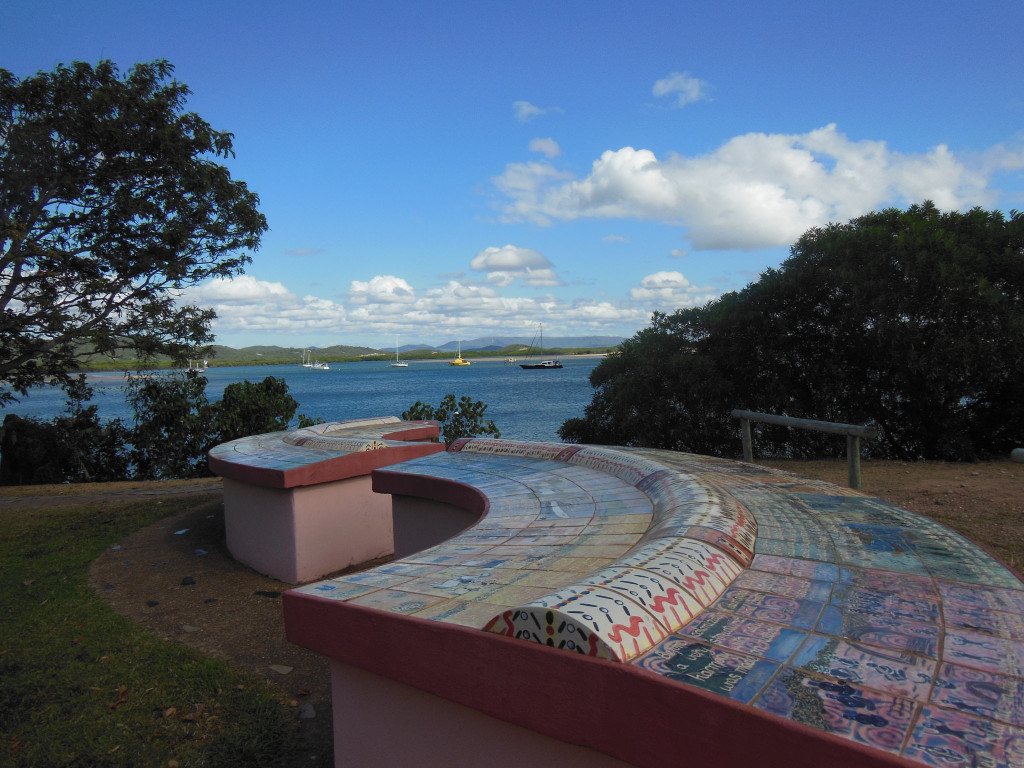
A unique attraction in Cooktown is the Milbi Wall, a one metre high curving wall, around 12 metres in length, made of hundreds of ceramic tiles and divided into three sections, each telling history from an Aboriginal perspective.
•The first tells the stories of the creation of the Cooktown area (sometimes called Dreamtime stories), and is important to the culture of the first Australians.
The second section of the wall represents first contact with Europeans.
The third section centres on the 1967 Australian Constitutional referendum, when the Australian people voted to give Aboriginal and Torres Strait people full equality, including voting rights.
Fisherman’s Wharf
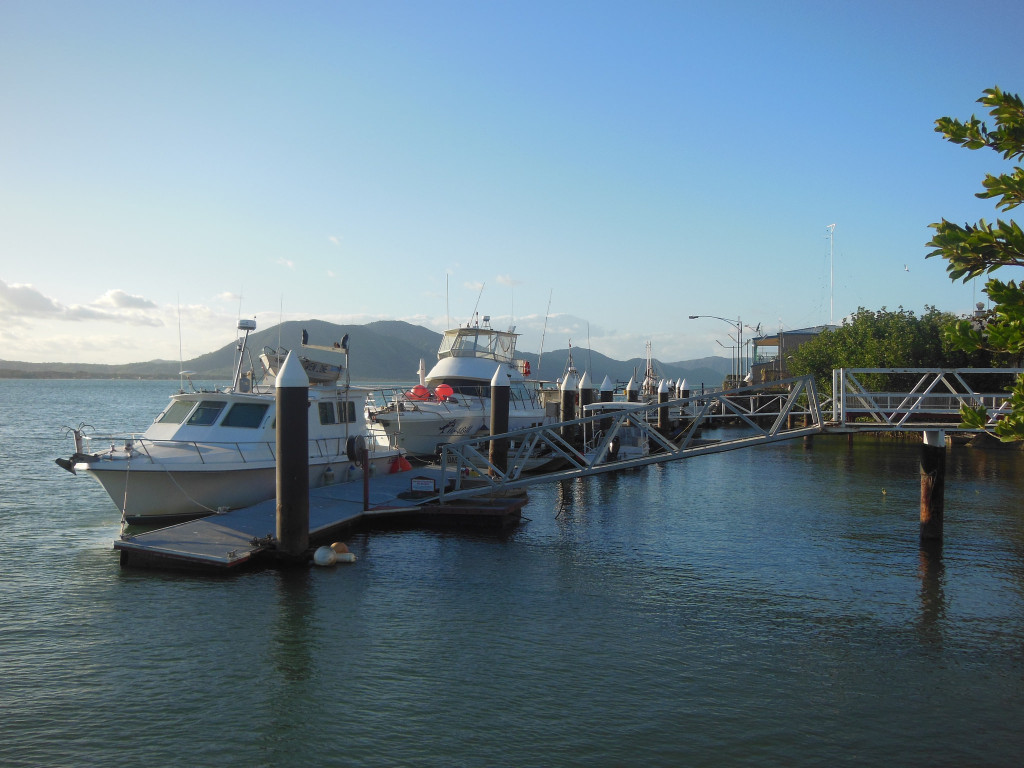
A beautiful spot for a stroll, fishing or even some alone contemplation-time. This was once, during the Gold Rush, one of the busiest ports in Queensland. It’s also the starting point of the River of Life Walkway which meanders through parklands to the Post Office, with plaques dotted along the way explaining the stories behind the historic sites you on your path.
There’s a handy WELCOME TO COOKTOWN map which you will find at information centres and hotels/motels which outlines these landmarks and more, making a driving or walking tour of the town easy and fun, ensuring you don’t miss a thing.
There are also copious tour options on offer in the area which take visitors on excursions to surrounding coast and bushland, for more history, fishing, hiking, swimming, driving, animal-spotting, Reef adventures and more. One of the most renowned and popular options leaving from Cooktown is award-winning Guurrbi Aboriginal Tours, which takes guests on a magical tour through surrounding lands, exploring life as it was and discovering ancestral rock art sites, lead by Willie, the traditional story-keeper of the Nugal-warra clan. As one guest has said on their website, the excursion is, “An amazing journey of story and dreaming, birthing and beginning”.
Cooktown is a great place to snorkel, fish, spot a crocodile, explore the Outback or just relax. Pristine beaches, incredible mountain views, cascading waterfalls, and excellent fishing are just some of the wonderful experiences to be enjoyed in this region. More information: TourismCapeYork.com
Travel essentials
In Cooktown you’ll find everything you need for a break away. There’s a pharmacy, newsagent, IGA supermarket, plenty of pubs and cafe options, take-away and huge bakery offering breakfast options and delicious Chinese dishes for lunch.
Have you been to Cooktown or any awesome little Aussie spots? Share your adventure and travel tips with us on FACEBOOK and TWITTER.
As those of you reading this blog will know, I’ve recently been on a journey through the ‘Heart of England’ with Back Roads Touring in the UK (organised via Escape Travel in Australia).
Back Roads Touring offers a wide range of options throughout the UK and Europe, and in fact I have my eye on several more trips in the UK that I’d love to book over the coming year or so (particularly the Corners of Cornwall 7-day, The Red Dragon of Wales 6-day, and Secrets of Southern England 4-day tours – take a look at the itineraries on the website and you’ll understand why). A few of our co-travellers had even booked two or three Back Roads Touring adventures in a row, with our Heart of England tour sitting in the middle of their holiday plans.
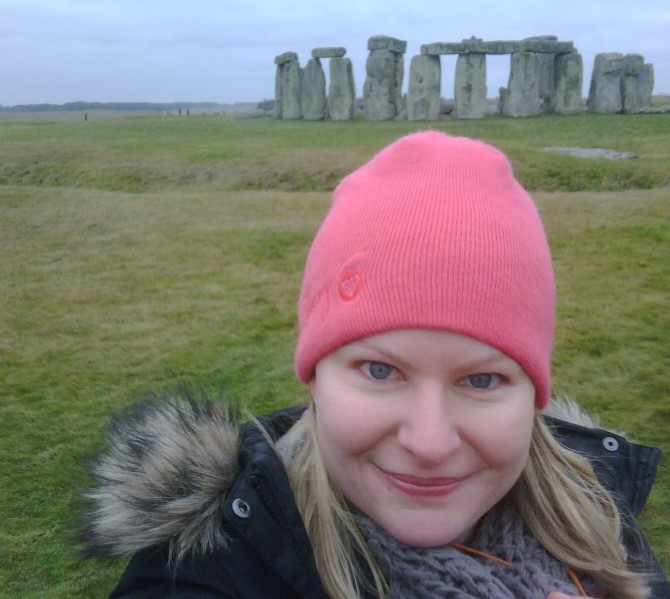
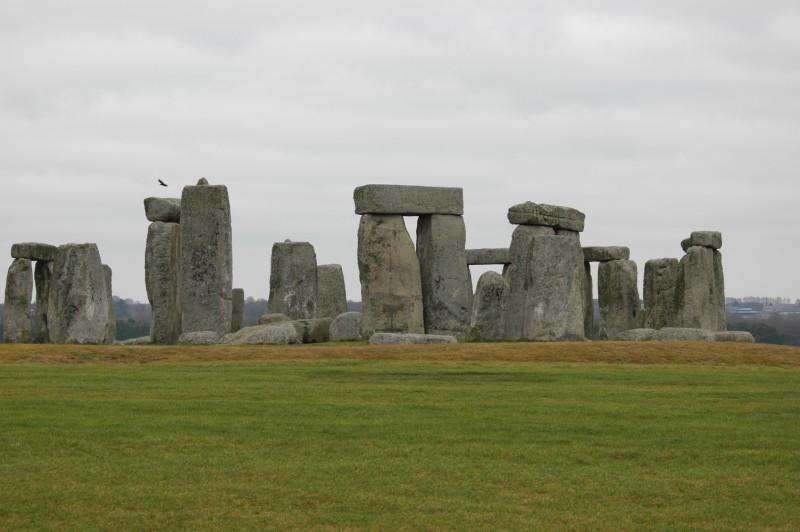
The Heart of England tour itself though is a classic choice, especially if you’re trying to decide on one particular option in the country. Four days was a nice length of time to be on a tour, there were no early morning starts and we generally had enough time to explore each destination. Best of all, this tour offers an overview of all that we’d typically associate with England – green countryside, old English pubs, castles, royalty, Shakespeare, medieval sites all the way through to mythological and mysterious destinations such as Stonehenge.
Evidently these tours are ideal for a person with a mature, intelligent and interested mindset who is a keen, (sometimes) seasoned traveller seeking a low-stress adventure, as well as quality, comfortable accommodation and up-market dining options.
With so many tour operators to choose from these days, why consider Back Roads Touring?
Small travel groups.
Mini bus means travelling through towns and seeing them (many large buses can’t go where Back Roads Touring can).
Quality dining options.
Personalised service including travel advice and assistance.
The opportunity to get to know everyone on board.
Relaxed travel experience.
Expert guides who introduce ‘local’ experiences at each tour stop.
Pleasant accommodation.
Aspirational destinations.
Back Roads Touring offers the discerning traveller the ultimate in exploration options based on over 25-years experience in the small group and tailor-made tour industry in this region.
My own trip highlights? This time around I’d definitely say Windsor Castle (vast, stunning, lavish, historical) and Stratford upon Avon (romantic… Shakespeare! Need I say more?). I was also impressed by the accommodation and delicious meals that were part of the ‘Back Roads Touring’ experience.
I was looking forward to today’s visit to Stratford upon Avon. I haven’t seen all of England’s towns (wish I had) but I think I can safely say this is definitely one of the prettiest of them all. Obviously this medieval market town is particularly famous for one writer – William Shakespeare.
I’ll admit, I’m a fan. He’s influenced so much of our language and his stories continue to stand the test of time. I’m intrigued by the entire period he represents and so visiting Stratford upon Avon has always been part of my own ‘bucket list’ of places to see.
Today it’s my birthday – I’m an Anzac Day baby. Happy Birthday to me! It was a special day in Stratford upon Avon too, as April 25 marks the anniversary of Shakespeare’s funeral.
His birth home, Anne Hathaway’s cottage, Holy Trinity Church (where he’s buried) and various other monuments around the town showcased tributes and flowers to mark the occasion. Interestingly, William Shakespeare was born on April 23 – and he also died on April 23 (evidently in different years)! Weird – the thought did cross my mind today – is it sad, ironic or completely extraordinary that you’re born and die on the same day? Perhaps it just means you’re extra extra special, which he definitely was (and is).
Everyone in our group enjoyed Stratford upon Avon – apparently the second most visited place in England outside of London. It’s a delightful and interesting town where even if you’re ‘not into Shakespeare’, it’s impossible to not feel a little whimsical and romantic exploring the old streets and homes – all well maintained by diligent workers and fans of the Bard.
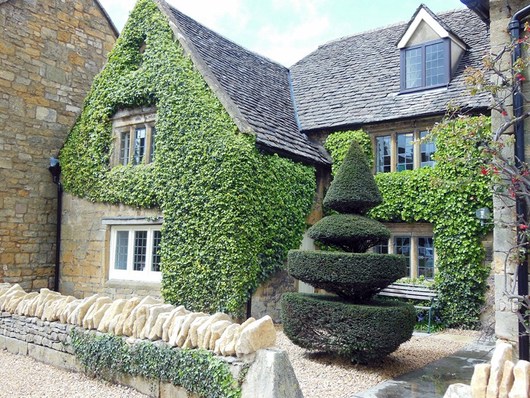
As part of the day’s adventures we visited Anne Hathaway’s enchanting cottage (pictured above). Steeped in history – if only the walls could talk.
Anne was William’s wife, and her family lived in this home for generations – up until 1911 in fact. Historical items in the home include beds (Anne’s parents’ bed as well as a bed that is thought to have been Anne and William’s ‘marriage bed’), kitchen and garden items.
The guide at the cottage, Alison, was SO knowledgeable and the visit was worthwhile for all her interesting facts and stories alone.
One thing I found incredibly entertaining was that she told us how in Tudor times, among much other baking, bread emerged from the oven burnt on the bottom (remember, no trays then); children under 11-years-old got the bottom bit first (they were ‘lowly’, like servants), next cut (or the ‘cut(s) above’) were distributed to the older children and so on; then the ‘upper crust(s)’ were given to the man of the house or distinguished guests. Hence class system connotations derived from a ‘simple’ process with a family loaf of bread – this, like so many other phrases coined from this period are still used to this day.
Today we also passed through quaint, intriguing little villages like Mickleton – home of the Three Ways House – a pub that lays claim to the popular ‘pudding club’ – renowned the country over! We also explored the exquisite villages of Broadway and Snowshill and stopped by a worthwhile lookout point (where on a clear day you can see all the way to Wales), Dover Hill – named after a guy called Robert Dover who actually came up with the concept of the Cotswold Olympick Games which this year celebrates its 400th milestone and highlights important cultural sports like… shin kicking – see a video here!
This is the second tour I’ve been lucky enough to be a part of, and once again I’m struck by how lovely it is to get to know different people from various parts of the world whom I might otherwise never have crossed paths with. Over breakfast, lunch, on the bus and while sipping on an afternoon coffee – each conversation with co-adventurers – solo travellers, couples, friends, mother-daughter teams and siblings – reveals something new: a positive attitude, life challenge overcome, surprising secret skill, a helpful piece of advice… It’s really possible to make lovely friends and be inspired on trips like this, because the bond of exploration and new experience is shared by all. We’re lucky to have amazing organised journeys on offer to us now – I’m a huge advocate of these tours because as I’ve said before – it ends up being about the travel and the (new) friends.
How remiss, Sugoi Travel & Style is in need of a little update… too much work and not enough play for this space’s moderator ;-)
Not to worry, you’re all in for some special treats over the coming few weeks. The Escape Travel / Back Roads Blogging adventure begins in just 12 days! In the meantime we’re running some special interviews with a few pals who also share a love of travel.
Today, the lovely Melissa Loakes fills us in on some insider’s tips to NORWAY.
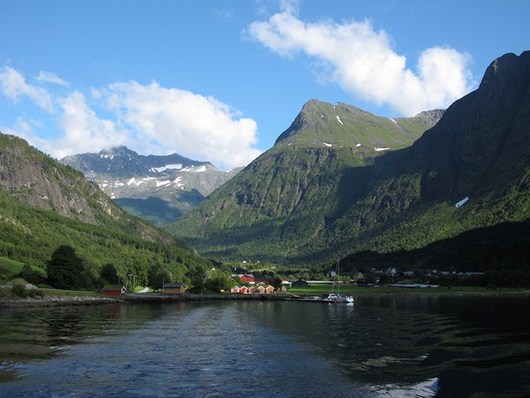
What’s so cool about Norway? It’s spectacularly beautiful, with friendly people and lots to see and do.
Why did you decide to go? I had wanted to visit Norway for years, mostly for its beautiful scenery, and decided that it was time to go!
Favourite part of your trip? The fjords and the surrounding landscapes. The scenery is breathtaking: words and photos can’t really capture the feeling of being completely surrounded by it. There are some lovely little towns on the fjords, too. I particularly liked Rosendal on the Hardangerfjord. I stayed in Bergen and Ålesund in Western Norway, both of which are lovely cities and departure points for fjord tours.
How did you get around? I flew to Bergen and Ålesund. Once there, I walked around the cities and caught buses to places that were on the outskirts. For my trips out on the fjords and to surrounding areas, I pre-booked day tours (these are unguided, but the transport – trains, buses and boats – for each leg of the journey is booked) and a boat trip. I did the Sognefjord in a Nutshell tour from Bergen with Fjord Tours; a boat trip on Hardangerfjord (also from Bergen) to Rosendal, to visit Baroniet Rosendal; and the Fjord Experience (to Geirangerfjord and Hjørundfjord) with 62°Nord.
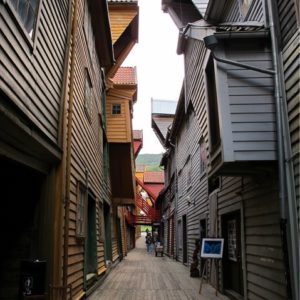
What would you recommend for others? I definitely recommend doing at least one trip on and around the fjords. There are a number of trips available to book through companies such as Fjord Tours and 62°Nord. In Bergen, I recommend a visit to the Bryggen area with its old wooden buildings and the Fløibanen funicular railway to the top of Mt Fløyen for a view over Bergen. If you like Art Nouveau, the Jugendstilsenteret/Art Nouveau Centre in Ålesund has exhibitions about the history of Art Nouveau and some beautiful pieces on display.
Any accommodation you would recommend? The Augustin Hotel in Bergen and the Scandic in Ålesund were clean, comfortable and conveniently located. Both also have good restaurants. I particularly liked the Altona wine bar at the Augustin Hotel in Bergen.
Anything you didn’t like about this travel destination? No.
An insider’s tip based on your travel experience to Norway? If you’re going out on the fjords, bring warm clothes (even in summer), as there can be quite a wind chill.
What’s your number one travel tip? Good research and preparation make for a much smoother trip.
Musings from 1 December 2011: Sitting in a darkened coach (which once upon a time I would have called a ‘bus’ – inside joke, ask Steve our Welsh Expat Explore driver ;-), on my way back from beautiful Whistler Village in British Columbia.
As I stare back at my own reflection in the window, unable to make out the Sea to Sky view into the black night, it hits me all of a sudden. It’s the day I knew it would nearly be all over, just a few days before we head back to Australia.
When travel comes to an end – what to do when the adventure is ‘over’
It’s hard to not feel a little overwhelmed by this realisation, as all the memories of packing, goodbyes and new beginnings during our first week staying in Bloomsbury come flooding back as if it was all just yesterday. What will I do when travel comes to an end?
I began updating my old Sugoi blog space a couple of years ago in 2009. Our very first entries document when we came up with a grand plan to drop everything and start a new life in London for a year or more (a smart or brave thing to do in our thirties?). We talk about plans, excitement, challenges, apprehension but most importantly the adventure that lay ahead.
Since then I’ve had all manner of fodder to write about – new jobs, new homes, snow, Starbucks, dogs we’ve met in the park (or cafes, street or just about anywhere actually), first-times for everything from visiting European cities to being stuck in airports, and having to work out where to buy groceries and linen.
It’s been 16 mesmerising, special, amazing and unbelievable months. We’ve made new friends, embarked on adventures I never dreamed possible and visited places abroad that I never ever thought I’d have the opportunity to go.
I no longer shed a tear at the thought that I’ve ‘missed out’ on travel – feeling like I’ve lost the chance to gaze up at the glittering Eiffel Tower as it lights up into the evening or missed out on falling in love with Prague as I watch from the castle above the city.
I have had a chance to smile down at the Gondoliers as they calmly float on by through a Venetian canal, and be chastised by the Gladiators in Rome for taking a photo of them outside the Colosseum without paying my €5. There are so many things that make me smile now – memories that are mine and Cooper’s, not just scenes from a film.
A couple of years ago for some reason I thought I’d lost all chance to follow my dreams of living and working overseas, but fate stepped in and opportunities arrived seemingly out of the blue. I’m super excited to go home – it was sad to leave our parents, siblings and dog. I can’t wait to give them all a big hug.
My brother now lives in Australia after being away in Japan for five years. It was really sad to literally pass him as he came back into the country and I decided to leave. Since we’ve been gone a new baby nephew has come into the world. What a happy little guy he looks to be; he’ll be sick of me kissing him by the time Christmas rolls around (as will my other 5-year-old nephew, come to think of it). It will be nice to have a ‘home’ base again, at least for the time being. I mean, I think even my computer is getting tired of moving around, with its flickering screen that keeps crashing every few minutes – makes getting through work very frustrating, but I can’t be too upset, it has seen me through travels and work from the Gold Coast to Cairns, London to Paris, throughout Europe, Scotland, Dublin and across to Prince Edward Island, down to Boston, across to British Columbia and beyond.
How though, do I come to terms with the end of life as I presently know it, where every day brings somewhere and someone new across my path? When I was in London I saw another travel writer Tweet something about this and I’ve saved his feature on file… somewhere… I remember the key message though. He was discussing his life as a traveller and a journalist and how each day abroad is addictive, intoxicating − especially for some personality types: the drug of a new day and the exciting type of challenges that the lifestyle brings.
When he touches back down at home and is planning to be there for an extended period sometimes it’s challenging in itself to get back to the ‘real world’.
The lesson, he pointed out, is that travel and adventure should teach us to bring the new found love of exploration back home. Explore places in your backyard that you might not usually go to or that you take for granted. Write about it, film and photograph, share tips, tricks and strike up new friendships that you would if you were a tourist.
My adventure has provided me with so much insight into what can be done – by me and others. I have a feature on the topic in the pipeline for a very fabulous Aussie national monthly women’s consumer magazine (out mid 2012), I’ve learned the value of blogging and social media from my time in London; I have learned to love and be inspired by music again (also thanks to London) and I have ideas and inspiration regarding the future.
Once upon a time I had looked on this day as the ‘end of the adventure’, but now I maintain the hope that it’s really only just beginning. Next year I have the privilege of going back to England as the new Blogger for Back-Roads Touring – something I would never have had the tools or knowledge to even consider entering in the first place but for this time outside of my comfort zone.
Following some supremely inspiring interviews with a series of women aged between 30 and 40 who all decided to do the same as me – take a mid-career pause to live, work and travel overseas – I realised that not one of us for a single second regret taking this ‘time out’ to pursue some kind of crazy Eat Pray Love dream.
In fact, each agrees that regardless of any fears prior to leaving ‘home’, all have returned with a greater sense of inspiration and knowledge we can do so much more than we ever thought possible. Certainly some, like myself, feel just a little bit broken hearted about leaving what became a ‘new home’ (whether it was London, Paris, Vancouver…) but we don’t believe the adventure is over. It’s life changing, both for what’s happened in the past and what will be directed to happen by us in the future.
When travel comes to an end, what to do when the ‘adventure is over’? Start a new one.
Hi, we’re Sarah & Cooper. Welcome to Travel Live Learn! We’re Aussie expats currently living in the UK (for the third time!) with our adorable Westie, London. Our mission? To inspire you to embrace a life of adventure—whether it’s travelling longer, relocating to the UK or Europe, or exploring the freedom of remote work and digital nomadism. Enjoy your time on our site! We'd love to stay in touch: subscribe for our weekly stories, updates and remote work job opportunities direct to your inbox.
TLL SHOP!
Grab our guides:
Master House Sitting with Our Must-Have 101 Essentials eGuide! Buy It Here
And, 7 Essential Strategies for Maximising Your Use of ChatGPT eBookBuy it here
Also, Visit Our Amazon Storefront! Shop Here!
To provide the best experiences, we use technologies like cookies to store and/or access device information. Consenting to these technologies will allow us to process data such as browsing behavior or unique IDs on this site. Not consenting or withdrawing consent, may adversely affect certain features and functions.
Functional
Always active
The technical storage or access is strictly necessary for the legitimate purpose of enabling the use of a specific service explicitly requested by the subscriber or user, or for the sole purpose of carrying out the transmission of a communication over an electronic communications network.
Preferences
The technical storage or access is necessary for the legitimate purpose of storing preferences that are not requested by the subscriber or user.
Statistics
The technical storage or access that is used exclusively for statistical purposes.The technical storage or access that is used exclusively for anonymous statistical purposes. Without a subpoena, voluntary compliance on the part of your Internet Service Provider, or additional records from a third party, information stored or retrieved for this purpose alone cannot usually be used to identify you.
Marketing
The technical storage or access is required to create user profiles to send advertising, or to track the user on a website or across several websites for similar marketing purposes.

 I’ll admit, I’m a fan. He’s influenced so much of our language and his stories continue to stand the test of time. I’m intrigued by the entire period he represents and so visiting Stratford upon Avon has always been part of my own ‘bucket list’ of places to see.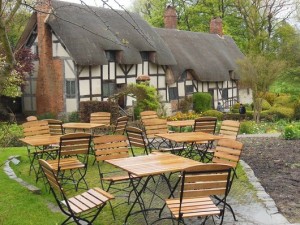
 The guide at the cottage, Alison, was SO knowledgeable and the visit was worthwhile for all her interesting facts and stories alone.
 What’s so cool about Norway? It’s spectacularly beautiful, with friendly people and lots to see and do.